For the last many years, I’ve carried a bulsika or beytele as I’ve traveled, or in moments I feel the need for a little extra protection. A bulsika (Ladino) or beytele (Yiddish) is a small Jewish protective pouch filled with protective elements such as dried plant matter, spices and natural ingredients. It is meant to be worn or carried on your person, to travel with you through your days.
My bulsika practice continues to evolve. But for now, I change my bulsika seasonally, or depending on mood. That might include different prayers, protection spells or angel cards. Some things stay in it forever, though: sea glass from my hometown, a small clipping of fur from my soul dog who passed away two years ago, a stone that I particularly love to touch and feels infused with good energy.
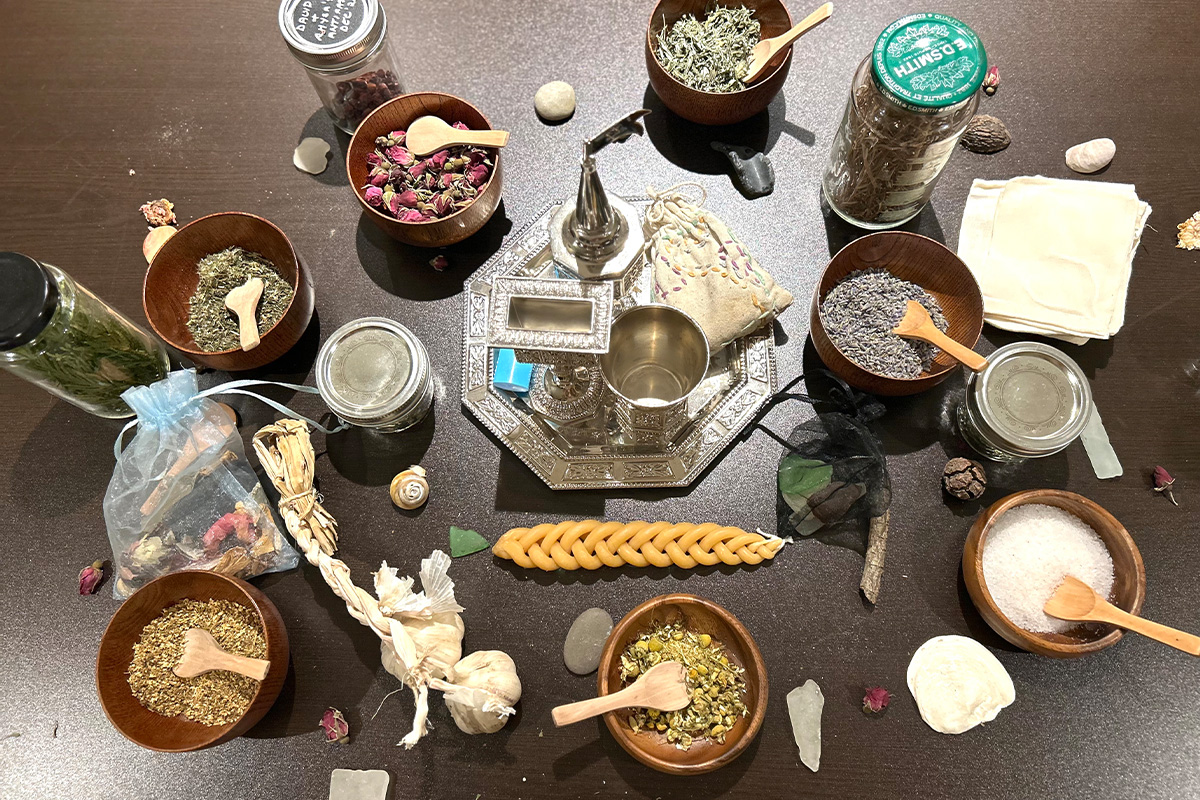
I change out the plants depending on what I need, thinking of their elements. Chamomile is a soothing and cooling plant, often associated with sleep and digestion. It’s seen as comforting and supportive, especially during transitional times and periods of grief. Roses are associated with love, beauty, passion, grief and longing, making them symbolic during transitional times and for emotional support. Rosemary is a plant of boundaries, used in various aspects of daily life, including as a kitchen seasoning and medicinally. Rosemary is also considered a protector, providing a barrier between the body and external harshness. And lavender is associated with calm, peace and a soothing, refreshing aroma.
For more about plants’ Jewish attributes, I recommend “Ashkenazi Herbalism” by Deatra Cohen and Adam Seigel, as well as “Sefardi Herbalism” by Naomi Spector. I also recommend “Ritual Medical Lore of Sephardic Women” by Isaac Jack Lévy and Rosemary Lévy Zumwalt for more context on the bulsika.
My bulsika practice has been such a balm and a joy for me over the years, something intimate and intrinsically magical, that I love sharing with others. So I recently had friends over for a bulsika-making workshop. It was a perfect night of crafting: very simple to set up, relatively cheap and the ideal way to be in community and bring a bit of delight and peace into the dark winter months. I recommend hosting your own bulsika workshop or taking intentional time to create one. It’s protective magic and the ultimate Jewish fidget toy. And because it is filled with beautiful scents, it can also be used as bessamin on havdalah, or just something wonderful to smell when you need a mood boost.
Heres’s what you need:
Herbs and Dried Plants: Source these from a local store with a bulk section, visit a local apothecary or collect from your cabinet. I even (responsibly) clipped some rosemary and lavender bushes I found around my neighborhood and dried them. Invite friends to bring anything they have lying around: garlic, salt, cloves, even loose-leaf tea.
Fabric and Twine or Small Satchels or Pouches: I had a lot of satchels from past gifts (like jewelry) on hand. So we reused them, but muslin tea bags would work as well. Alternatively, you can create your own little pouches by cutting circles from old fabric (an old shirt, scraps, etc.) and then tying the circle at the top with twine. You could also quickly sew up a little pouch from fabric or felt. This part is up to you, your imagination and your resources.
Set the Mood: First, because a bulsika workshop is an offering, I wanted it set up as beautifully as possible. I took out wooden and steel bowls and artfully arranged the table, imagining it as an altar. I boiled tea and made the room as inviting as possible. Once my friends arrived, I started by sharing some poetry, including one of my own. I love to pull in Jewish poetry with magical elements, and I recommend Rachel Kahn, Aurora Levine Morales and Marge Piercy for some juicy, feminist Jewish magical poetry energy.
Ask Participants to Share: Before we began crafting, I had my friends share any stories of the material they brought, and what plants they feel connected to and why. We talked about the idea of “Plantcestors” and ways plants have cared for or protected us.
Include a Writing Exercise (Optional): While this isn’t traditional, I had each of my friends write a little prayer or protection spell, and place it in their bulsika. They also wrote down the attributes of the different plants they picked so that they could refer back.
As we worked, we listened to Dori Midnight’s Jewish Protection Magic playlist, a favorite of mine. Our table was filled with a vast array of plants and spices, and I was moved by the stories people shared. An Irish friend of mine, particularly connected to the hawthorne on the table, shared that a hawthorne tree in Ireland marks the home of fairies, which charmed us all. While a bulsika is a Jewish practice, I purposefully invited non-Jewish friends so we could cross-culturally learn about what different plants mean to each other.
It was a wonderful, cozy night. I love thinking about how many of my loved ones are now protected by little pouches, and that we are all now connected in a tangible way. Because what is magic but community care, but taking time to listen and create together? My new bulsika feels especially meaningful because it was made while surrounded by friends who were dreaming of a safer, happier world and praying for it through the acts of writing, crafting and chatting.