
Power
What are the antisemitic tropes about Jews and power?
Back to: Hey Alma’s Guide to AntisemitismWhat makes antisemitism different from other forms of prejudice? While most hatreds often diminish their targets, antisemitism paradoxically attributes excessive power to Jews.
However, this conspiracy-minded thinking doesn’t elevate Jews, but rather dehumanizes them by distorting and exaggerating Jewish influence not only over key industries, but society itself.
In this section, we will look at some of the most prevalent ways in which Jews are accused of having too much power (not including in finance and Hollywood, which you can read about more here and here).
TL;DR: GLOBALISTS / NEW WORLD ORDER / JEWS CONTROL MEDIA / Jews Start All Wars / AIPAC / Jewish Lobby / JEWS CONTROL Weather / Jews Control Outer Space
What’s the deal with calling Jews “Globalists”? Is that an insult?
It’s definitely not a good thing. Inextricably linked to the idea of Jews as “perpetual foreigners,” a “globalist” is someone who is concerned not with their own country, but with the international order — conducting business and using influence everywhere, loyal to no place. Today, “globalists” are often portrayed as being opposed to national or “Western values” such as patriotism and Christianity.
Does this have to do with the “New World Order” or “NWO”?
Kind of. “Globalist” is sometimes used in concert with the term “New World Order” or “NWO,” the idea that a secret cabal of elites is working orchestrating world events to establish global tyranny. It is not uncommon to see a political figure or member of the media referred to as a globalist or “NWO globalist,” with the term disproportionately applied to Jews.
Politicians from Hungarian Prime Minister Viktor Orbán to U.S. President Donald Trump regularly use the term “globalist,” insisting that it has nothing to do with Jews or Jewishness, despite repeatedly being told that the term has historically been used by antisemites to portray Jews as the shadowy manipulators behind an alleged plot for world domination.
Why do people say that “Jews control the media?”
This conspiracy stems from “The Protocols of the Elders of Zion,” an antisemitic screed published in Russia in the early 1900s that spread throughout the world, including the U.S. This document (covered in more details here, included, among other lies, the idea that Jews control the media in order to manipulate public opinion.

This belief persists to this day, sometimes in coded references like “media elites” or “coastal elites” who are supposedly deceiving the public. (Not everyone who uses these terms has the Jews in mind, but antisemites who use these terms certainly do.)
Sometimes, the antisemitism is even more obvious: for example, the term “Jew York Times,” used to suggest the New York Times has a pro-Jewish bias. Of course, there are editors and reporters at the New York Times and other media organizations who are indeed Jewish, as there are in many industries. But there is a fundamental difference between acknowledging this reality and promoting the false, antisemitic claim that Jews collectively control or manipulate the entire media landscape. The latter is a harmful conspiracy theory with no basis in fact (especially considering the many Jews who take issue with the New York Times’ coverage).
Where does the idea that “Jews start all the wars” come from?
The antisemitic theory claiming Jews deliberately instigate wars to gain power and profit has deep historical roots. This narrative became particularly widespread in the early 20th century and played a significant role in Nazi propaganda before and during World War II.
A notable American example occurred in September 1941, when celebrated aviator Charles Lindbergh gave a speech in Iowa blaming “the British, the Jewish [sic] and the Roosevelt Administration” for pushing the United States toward war. This exemplified how Jews were portrayed as warmongers working against national interests.
This harmful antisemitic trope found new expressions in the early 2000s when critics of the Iraq War sometimes pointed to Jewish leaders associated with neoconservatism (a political movement advocating an assertive foreign policy) as evidence of Jewish influence over military decisions.
In 2017, former CIA operative Valerie Plame Wilson tweeted out an article titled “America’s Jews Are Driving America’s Wars.” When criticized, she first defended the piece as, “very provocative, but thoughtful” and noted that “many neocon hawks ARE Jewish.” She later walked back her statement, explaining, “OK folks, look, I messed up. I skimmed this piece, zeroed in on the neocon criticism, and shared it without seeing and considering the rest.”
It’s true that there are some Jews who are proponents of aggressive foreign policy, and even of war. It’s also true that Jewish communities have often been among the strongest advocates for peace as well. But especially considering no president or vice president of the United States has ever been Jewish, it seems a bit much to blame Jews for all of America’s wars, or to assign blame for wars to Jews or any other entire group of people for that matter. And by “a bit much,” we mean a bit antisemitic.
What exactly do people mean when they say “the Jewish lobby?”
There are many individual Jewish lobbying groups that advocate for various political causes. Separately, there are also pro-Israel lobbying organizations, some of which are explicitly Jewish, that advocate for U.S. support of Israel.
But the phrase “the Jewish lobby” is problematic for two reasons. First, it conflates Jewish lobbying with lobbying for Israel. Sometimes these two things are the same, but sometimes they’re not. For example, HIAS, the Hebrew Immigrant Aid Society, advocates for the rights of asylum seekers and refugee rights. It’s a Jewish group and describes itself as being motivated by Jewish values, but is doing different work from, say, AIPAC, the American Israel Public Affairs Committee, which is advocating for a strong U.S.-Israel relationship (more on them in the next section).
The second and more concerning issue with the phrase “the Jewish lobby” is that it perpetuates the idea that there is one monolithic group advancing Jewish interests. There is no one such group. There isn’t even an agreed upon set of Jewish interests (as anyone who’s ever gone to a Passover seder would know). The phrase “the Jewish lobby” could push the idea that there’s an organized Jewish cabal working toward an agreed upon set of outcomes, when in fact there is no such thing.
What exactly is AIPAC?
Founded in 1963, AIPAC, or the American Israel Public Affairs Committee, is a lobbying organization that advocates for what it considers to be pro-Israel policies to the legislative and executive branches. Like other political advocacy groups, AIPAC tries to influence political outcomes and shape policy by endorsing candidates, through political spending, by organizing trips to Israel for politicians and staff, and direct lobbying of elected officials.
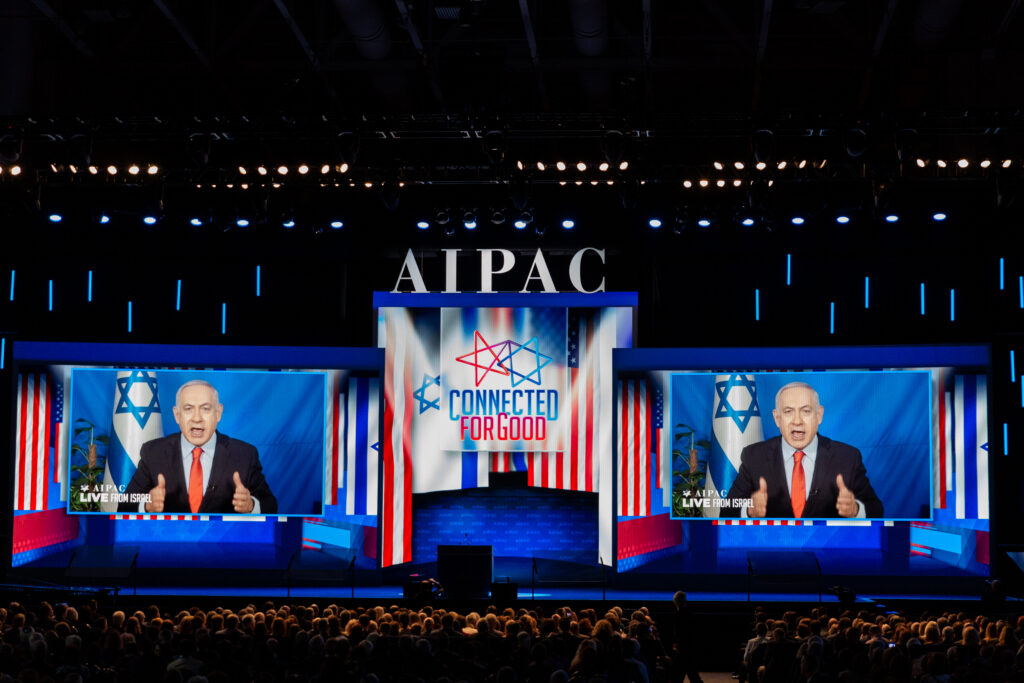
While AIPAC is certainly influential in its specific policy area, descriptions of the organization cross over into antisemitism when they portray AIPAC as having almost single-handed control over U.S. foreign policy, which both overassigns agency and strips it from the people actually making policy.
For example, in 2019, Congresswoman Ilhan Omar, in response to a tweet about pressure she was under for criticizing Israel, said it was “all about the Benjamins” and clarified in a subsequent tweet that she was talking about AIPAC. She was criticized for pushing an antisemitic trope, and in fact saying that the criticism she received was wholly down to money from a lobbying group was both factually inaccurate and an over assignment of agency to AIPAC.
What are some of the other big groups people might be talking about when they say “the Jewish lobby”?
There’s the American Jewish Committee, the Anti-Defamation League, Jewish federations (basically a movement of communal Jewish organizations) and the Conference of Presidents of Major American Jewish Organizations.
In some cases, Jewish groups work together — the federation system, as we said, is a network or movement, and the conference is a collection of dozens of mainstream Jewish groups. And often, these groups are working toward similar ends. Still, there are also Jewish groups advocating for policies that are quite counter to those advanced by most mainstream or establishment Jewish groups on, say, Israel, just as there are non-Jewish groups that are advocating for the same positions as these other Jewish organizations.
OK, last question about Jews and power… where the heck did the idea that “Jews control the weather” and “Jews control outer space” come from?!
Such a great question. In short: They are wild antisemitic fantasies that people seem to literally pull from thin air as a way to vilify, discredit and otherwise harm Jews.
Some antisemitic conspiracies about power are less subtle. For example, in 2018, Trayon Martin, a member of city council in Washington, D.C., shared a video alleging that the Rothschild family — a wealthy Jewish European banking family about whom conspiracy theories have circulated for hundreds of years — was making it snow in the city so as to have more control over it.
That same year, Marjorie Taylor Greene, a congresswoman from the state of Georgia, posted on Facebook hypothesizing that a wildfire in California had been started by a laser or light beam sent down from space by Rothschild-connected leadership of an energy company. Suffice to say, this is not what had happened.
Those examples are obviously ludicrous (unless you are an antisemite). But as with money, it’s not that there aren’t powerful individual Jews or Jewish groups. The way to fight antisemitism isn’t to pretend that there are no Jews who have influence. But it’s worth remembering that accurately describing reality is one thing; overstating and ascribing agency and inventing malicious intent is another.