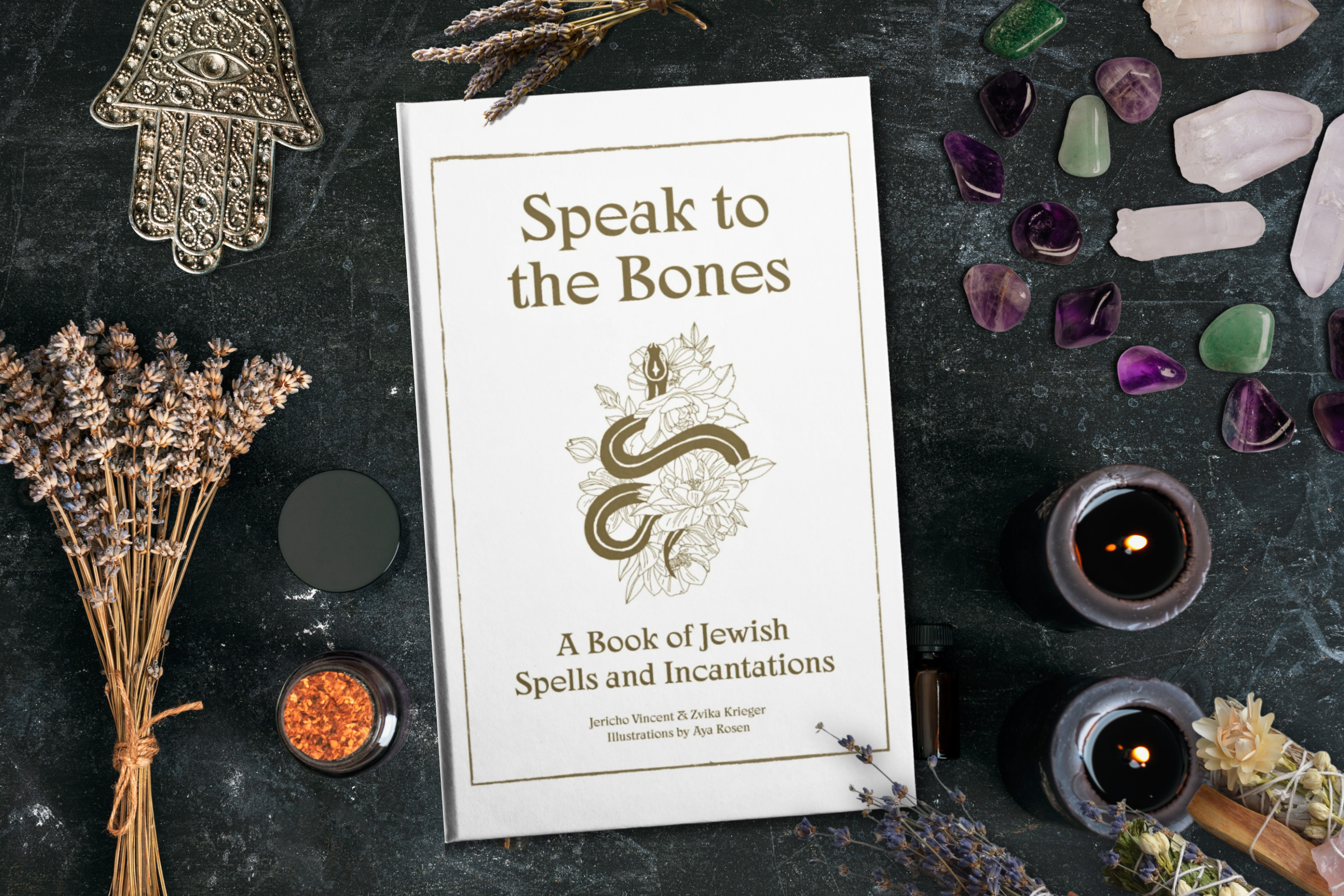
When we first heard that Rabbi Jericho Vincent and Rabbi Zvika Krieger had teamed up to create a book of spells for the modern Jewitch, we couldn’t wait to shout about it from the rooftops as if we were Tevye himself.
“Speak to the Bones: A Book of Jewish Spells and Incantations,” revives the ancient Jewish practice of oral manifestation and reclaims a spiritual lineage that belongs to all of us. Each spell or incantation — 40 in total — is illustrated with gorgeous gold line drawings by Aya Rosen (who is a tattoo artist as well as an illustrator, which absolutely checks out).
The book is a tangible portal to use if you’re looking to add a little more magic and Jewish mysticism in your life. It’s out on Dec. 8, 2026, but here are four spells to tide you over until you can get your hands on the whole volume.
The following is an excerpt from “Speak to the Bones: A Book of Jewish Spells and Incantations” by Rabbi Jericho Vincent and Rabbi Zvika Krieger.
Cozy Season with Hey Alma. As the days get shorter, Hey Alma is where you can curl up with Jewish culture that's funny, honest, and open to everyone.
A Spell for Treating Illness
Viene para sanarte melisinarte
Komo Miriam A-Levy
Ke sinava i melisinava
Yo todo mal se lo kitava
I a la mar lo echava
This comes to heal you and bring you medicine
like Miriam the Levite
Who would bring medicine and heal
And take all the illness away
And throw it to the bottom of the sea
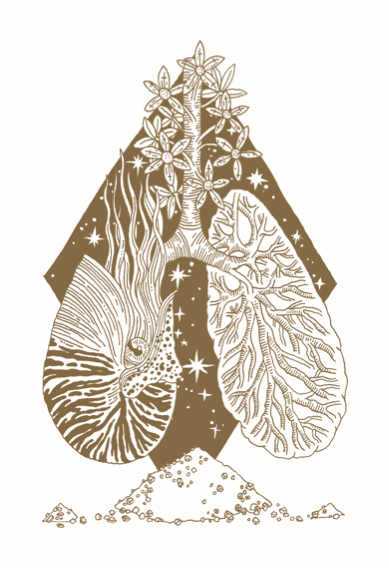
Salt is a crucial Jewish mystical ingredient, used in ancient temple rit uals. It is solid yet dissolves into water—a channel for softening what has hardened in us, moving what has been stuck. As a preservative, it reminds us of the parts of ourselves that endure even amidst uncertain health. Miriam was one of the Jewish people’s greatest prophets, who led the ancient Israelites out of Egypt. Her well was a mystical source of living waters that followed the Israelites through the desert. Miriam is associated with healing, patience, and survival. This spell is said while rubbing salt water onto the face, arms, and chest of the person in need of healing. The person then drinks three sips of the mixture. One of the meanings of the name Miriam is “salt sea,” so in a way, in this spell we are applying the spirit of Miriam directly onto and into the body of the person in need of healing, whether it be yourself or another.
Source: Oral tradition of Sephardic women; Era: Unknown; Original langu age: Ladino
A Spell for Relieving Anxiety
קוֹל וּמַרְאֶה וְרֵיחַ מְשִׁיבִין דַּעְתּוֹ שֶׁל אָדָם
Kol umareh v’reiyach mishivin da’ato shel adam
Sound, sight, and smell — calm this earth-being’s mind
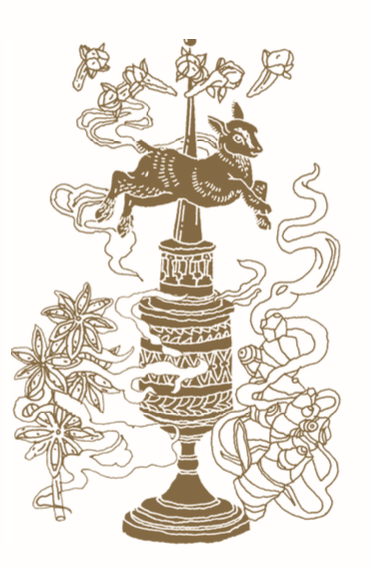
When we’re spiraling into anxiety, we can reground ourselves by notic ing: What do we hear? What do we see? What can we smell? Often anxiety is tied to fear over something that may happen in the future; connecting with our senses is a way to ground us in the present, to the parts of life that we do have control over. This incantation can be a guide in stressful moments, returning us to a place of calm. The care of the great young mystic Reb Nachman flows through these words and helps soothe our minds.
Source: Reb Nachman of Breslov in Sefer HaMidot, “Depres sion” 1:31; Era: 1810; Original language: Delivered orally in Yiddish, recorded in Hebrew
A Spell for Love
וַתֵּצֵא תִּצְחָק לָשׂוּחַ בַּשָּׂדֶה לִפְנוֹת עֶרֶב
וַתִּשָּׂא עֵינֶיהָ וַתֵּרֶא וְהִנֵּה גְמַלּוֹת בָּאוֹת
Vatetze titzchak lasuach basadeh lifnot erev
vatisah eineha vatare vehinei gemalot ba’ot
Laughter meditates in a field at twilight
She lifts her eyes and sees camels approaching
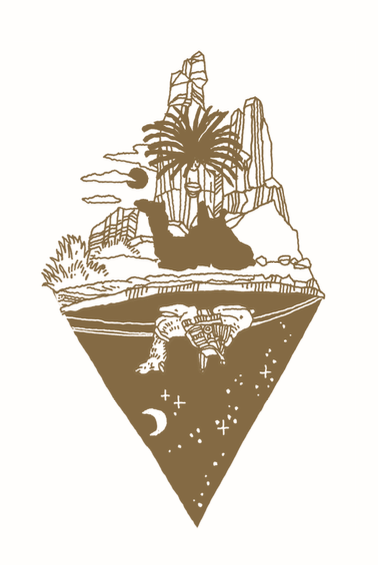
The spell comes from the first scene in the Hebrew Bible that depicts people finding romantic love. The main character, Yitzchak (Isaac), or Titzchak in the feminine—literally, “she will laugh”—has endured enor mous heartbreak and loneliness. At twilight, they go out into a field to meditate, then they raise their eyes and see the person who will become their beloved approaching on a camel. Twilight is a particularly potent time in the Jewish ancestral tradition. It is an in-between state when we are invited to let go of things being a particular way. It is believed that miracles are born in twilight.
Camels are a powerful animal in the Jewish tradition as well. They are connected with feminine spiritual power, and are a symbol of resilience and kindness. Laughter itself can open us to love, breaking down our pro tective armor of self-seriousness and opening ourselves to joy and play.
At twilight, spend some time meditating with closed eyes or lowered gaze, ideally in a field or outdoor space. Then open your eyes and imag ine the beloved you seek traveling towards you. What are the lessons they have to teach you? How will you prepare for their arrival? What does it feel like to open into the faith that they are on their way? You might close this spell with a hearty laugh.
Source: Genesis 24:63 (Toratah); Era: Biblical; Original language: Ancient Hebrew
A Spell for Success
וִיהִי נֹעַם אֲדֹנָי אֱלֹהֵינוּ עָלֵינוּ וּמַעֲשֵׂה יָדֵינוּ כּוֹנְנָה עָלֵינוּ וּמַעֲשֵׂה יָדֵינוּ כּוֹנְנֵהוּ
Vihi no’am Adonai Eloheinu aleinu
uma’aseh yadeinu konenah aleinu uma’aseh
yadeinu koneneihu
May the favor of our Foundation, our
Higher Power, be upon us,
Let the work of our hands prosper,
prosper the work of our hands!
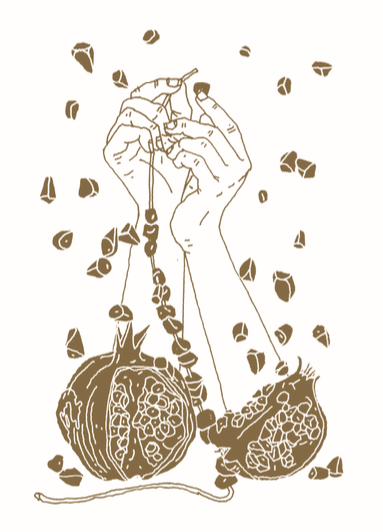
This is a classic spell, beloved for generations. Try out the Hebrew—it rhymes. Our ancestors believed this to be a spell recited by Moses when the people completed the construction of their sumptuous traveling temple. When we recite this spell, we invite ourselves to see all of our work as a luxe sacred mobile sanctuary, a vehicle for bringing awe and love and goodness into the world. This helps us align our projects with the cosmic project, which helps success flow through us. It is particular ly auspicious to recite this spell on Saturday night for work we plan to do in the week ahead. The sixteenth-century mystic Rabbi Isaac Luria taught that in times of crisis, this spell should be recited seven times every day to ensure the success of our efforts to ward off danger.
Source: Psalm 90:17; Era: Biblical; Original language: Ancient Hebrew