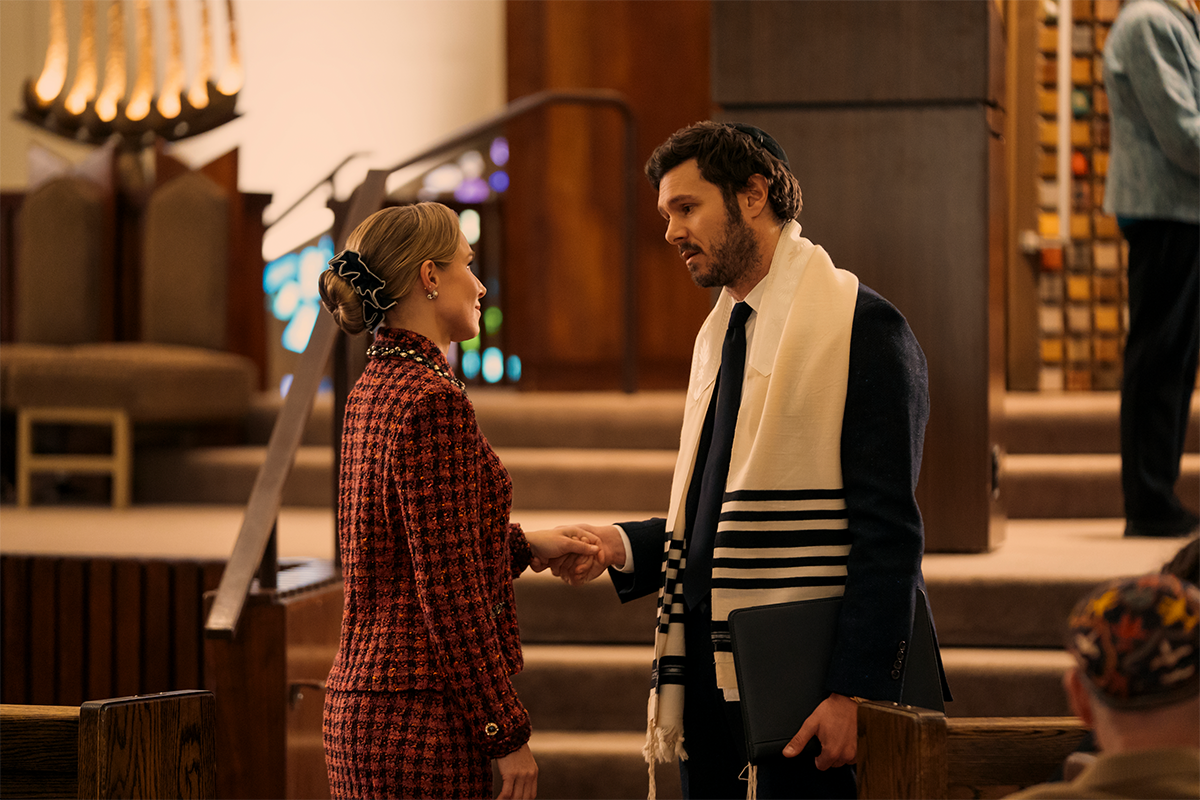
Editorial Note: Spoilers ahead for season three of “Nobody Wants This.”
Over its lifetime, it seems the one thing “Nobody Wants This” cannot figure out how to do well is a central part of its existence. That thing? Judaism. Critics like Esther Zuckerman have called the popular Netflix show’s depiction of Jewish women (at least in season one) “mean-spirited,” while Steven Zeitchik at The Hollywood Reporter opined Erin Foster, the show’s creator, was using “Judaism as a hood ornament.”
Oof.
In my own writing on “Nobody Wants This,” I’ve endeavored to get into the specifics of this Judaism, fact-checking each claim the rom-com makes and rating each season on overall accuracy. What I’ve found so far is… less than ideal. “Nobody Wants This” has a mean accuracy score of 3.25 out of 5 hot rabbis. (How I reach this score is proprietary information. Gematria-esque calculations and general vibes are involved.)
Cozy Season with Hey Alma. As the days get shorter, Hey Alma is where you can curl up with Jewish culture that's funny, honest, and open to everyone.
As I wrote last year, the show’s sophomore turn was the more egregious offender between the two seasons. It relied on generalizations about and extrapolations of Judaism and Jewish culture; at the same time there were more than a few memorable mistakes. Remember when the show confused the Jewish birthday of the trees and the saddest day on the Jewish calendar? Bina would not stand for that and neither will I.
Credit where it’s due, however, “Nobody Wants This” has also captured moments of Jewish verisimilitude. Miriam’s bat mitzvah in season one and the brit bat in season two featured both the ritual side and the party side of Jewish life cycle events. The show even pulled off Joanne’s mom Lynn’s decision to convert with a deft balance of comedy and genuine spirituality.
So can “Nobody Wants This” season three redeem itself? Let’s take a closer look.
(Editorial note: This fact check will skip over claims previously addressed in season one and two. For example: That Jews greet each other with “shalom” or say “pu pu pu.”)
Episode 1 (It’s Perfect)
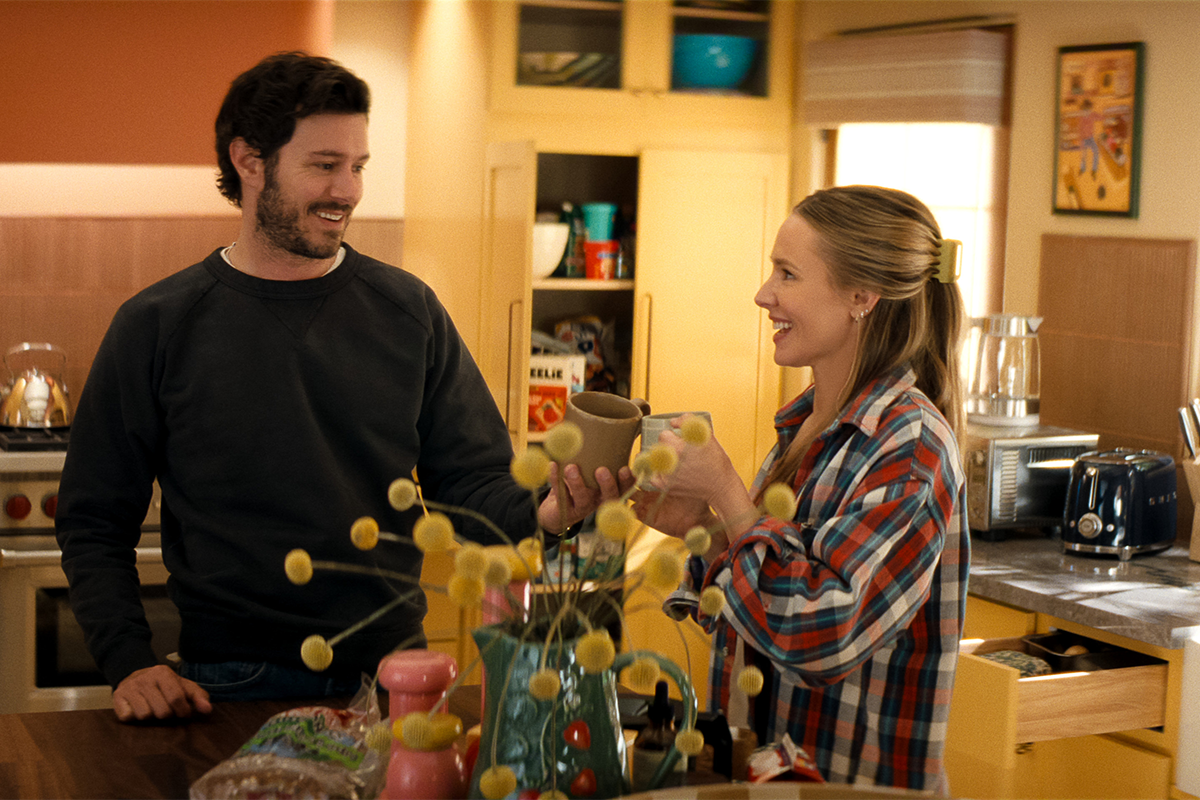
Claim: A conversion class can be named “Intro to Judaism.”
Context: As Joanne and Noah unpack their new home with their families, Joanne talks about starting her conversion class. Lynn (aka Batya) responds, “Joanne, the correct name for the class is ‘Intro to Judaism.'”
Verdict: Sure! Names for conversion classes obviously depend on the synagogue or organization, but this sounds correct.
Claim: “That’s not the way the rugelach crumbled” is a phrase that exists.
Context: When Bina lightly scolds Joanne for playing a part in Noah’s decision to leave Temple Chai, only to begin conversion classes there, Noah comes to her defense. Of not becoming Temple Chai’s senior rabbi, Noah replies that he would’ve loved to the job, but “that’s not the way the rugelach crumbled.”
Verdict: Rugelach are a rolled Ashkenazi Jewish cookie often filled with chocolate, nuts, cinnamon or fruit preserves. Noah plays on the phrase “That’s the way the cookie crumbles” here, making it more Yiddishkeit. This isn’t a common idiom in Jewish communities, but it is cute and not wrong by any means.
Claim: Jewish actor Timothée Chalamet and Kylie Jenner won’t break up in 2026.
Context: Now that they’re living together, Joanne and Noah end the day by cozying up in bed and watching videos on their phones. (So relatable.) One of the videos Joanna shows Noah is a woman who has made 400 predictions for 2026, one of them being that Timothée Chalamet and Kylie Jenner will break up. “What if it happens?” Joanne asks. “Yeah, well, it won’t,” Noah shares his doubt.
Verdict: You know, as the days go on, I’m more and more convinced that Timmy and Kylie will never break up. I’m going to preemptively say this is true.
Episode 2 (Daddy’s Home)

Claim: “The Mirror Has Two Faces,” “Yentl” and Mel Brooks movies are classic pieces of Jewish media.
Context: Joanne’s conversion class nemesis Sebastian lists these as movies he’s trying to watch.
Verdict: “Yentl” and Mel Brooks are hugely important to Jewish culture. “The Mirror Has Two Faces” is one of Barbra Streisand’s lesser known works but it’s coming from Jewish icon Babs nonetheless, so we’ll say this one is accurate.
Claim: It’s a stereotype that Jews make good husbands.
Context: Joanne’s conversion classmate Amber says her reason for wanting to convert is to end up with a Jewish man. “Can I say that,” she wonders aloud. “I mean it in a good way.” Rabbi Eden then jumps in to say that perhaps during the session the class should talk about stereotypes about Jews.
Verdict: This is indeed a stereotype! Even though being a good husband or partner is an admirable quality, it’s still harmful to make sweeping generalizations about Jews as a whole. Philosemitism, the act of putting Jews on a pedestal, can be tokenizing and even fetishizing.
Claim: A rabbi could be named Eden.
Context: Joanne’s Intro to Judaism class is taught by Temple Chai’s Rabbi Eden.
Verdict: There are no hard and fast rules about what a rabbi can be named. But, Eden is a unisex Hebrew name meaning “pleasure” or “delight.” It also references the biblical Garden of Eden. So yes, a rabbi could very well be named Eden.
Claim: Guilt is a part of Jewish culture and something that Jews joke about.
Context: Rabbi Eden begins the class by saying, “Don’t worry, the guilt doesn’t happen all at once. It just happens gradually. You barely feel it until one day you’re strangled and dead.”
Verdict: That Jews feel guilt more than any other culture or religion can be a stereotype. But it is also something the Jewish community loves to joke about and being guilted by Jewish family members is a not uncommon experience.
Claim: Bagel trucks are a thing.
Context: As Noah tries to suss out how Temple Chai likes senior rabbi Big Noah, he gets invited to a bagel truck by an administrative worker in the temple office.
Verdict: They are! LA-based bagel business Yeastie Boys has a truck. Anything can come in a food truck now, isn’t modernity amazing?
Claim: Judaism is 3,500 years old and one of the oldest monotheistic religions.
Context: Rabbi Eden says this during Joanne’s first conversion class.
Verdict: Per My Jewish Learning, Judaism is the oldest monotheistic religion. “The earliest biblical material was likely composed no earlier than the 10th century BCE,” MJL states. “The historicity of many biblical stories is questionable. The first extra-biblical reference to the people Israel occurs in the late 13th century BCE.” Depending whether you start the clock at the 10th century BCE or the 13the century BCE, that roughly puts Judaism between 3,000 and 3,500 years old.
Claim: A romance, particularly including a rabbi, can send a temple community into disarray.
Context: Sebastian tells Joanne he didn’t include her in a text groupchat because she’s “drama.” When Joanne asks for clarification about how she’s drama, Sebastian says that her relationship with Noah sent Temple Chai into disarray.
Verdict: The social dynamics of temple communities are similar to those of any large groups. Unexpected change, like Noah leaving the synagogue after starting to date a non-Jewish woman, has the potential to shake up any community. In short: You kinda are the drama, Joanne.
Claim: The prophet Moses has a grave.
Context: Sebastien tells Joanne that Moses would be rolling in his grave if the prophet found out she was a rabbi’s wife.
Verdict: According to Devarim 34:5-6, “So Moses the servant of the LORD died there, in the land of Moab, at the command of the LORD. He buried him in the valley in the land of Moab, near Beth-peor; and no one knows his burial place to this day.”
Claim: There is a specific Jewish service held for Erev Rosh Hashanah.
Context: The board of Temple Chai asks Noah to be a guest speaker at their Erev Rosh Hashanah service as a sort-of audition to become senior rabbi.
Verdict: Yes! Erev Rosh Hashanah, understood in the United States to be the evening Rosh Hashanah starts, is marked in religious communities with a special evening prayer service.
Claim: There are guest speakers at Erev Rosh Hashanah services.
Context: See claim above!
Verdict: There can be, particularly at a Reform or Conservative shul akin to Temple Chai. Congregants might be asked to give a midrash about the new year or liturgy, or even just ask the group for donations.
Claim: “Shana tovah” is a Rosh Hashanah greeting.
Context: Rabbi Eden greets her conversion students this way the day before Rosh Hashanah.
Verdict: Yes! “Shana tovah” means “good year” in Hebrew. It is the most common greeting for Rosh Hashanah, but there are also plenty of others.
Claim: Rosh Hashanah is the Jewish New Year and it starts at sundown. It’s a day of new beginnings.
Context: Rabbi Eden tells her students this.
Verdict: Yes, yes and yes! Rosh Hashanah means “Head of the Year” in Hebrew and it celebrates the birth of the world, as described in Bereshit. Rosh Hashanah always begins on the first of the Hebrew month of Tishrei and because the Jewish calendar is lunar, this means Tishrei starts as soon as the sun sets. Rosh Hashanah is a deeply introspective time where Jews are commanded to engage in teshuvah (repentance or return), tefillah (prayer) and tzedakah (justice).
Claim: Judaism includes ritual, openness, close-knit community and cozy vibes.
Context: Rabbi Eden asks her students to share what drew them to Judaism. Joanne says that when Noah first broached the topic of her conversion, she wasn’t sure about Judaism. Then, she started to love it because of the ritual, openness, close-knit community and cozy vibes.
Verdict: None of these qualities are specific to Judaism, but they can be a part of it.
Claim: Jewish communities are accepting of LGBTQ+ individuals.
Context: Sebastien’s response to Rabbi Eden is that he never thought organized religion would be a part of his life because of his homophobic father. However, when his fiancé David introduced him to Judaism, Sebastien felt welcomed by the Jewish community.
Verdict: Communities within Reconstructing Judaism, Reform Judaism, Jewish Renewal and Humanistic Judaism are (generally speaking) all welcoming of LGBTQ+ individuals. LGBTQ+ individuals may be ordained as rabbis and religiously married, and are welcomed as active parts of the community. The Conservative movement’s stance on gay rights is a bit more complicated, with the possibility that members of any given Conservative Jewish community might believe homosexuality or being transgender is a sin. However, the Conservative movement’s Jewish Theological Seminary began admitting openly queer students in 2007. In 2012, the movement formally recognized marriage equality for Conservative Jews.
There are and always have been LGBTQ+ Orthodox Jews. In 2023, Shua Brick became the first openly gay rabbi to work as a congregational rabbi. But Orthodox and Modern Orthodox Judaism adhere strictly to halacha (Jewish law) as laid out in the Torah and rabbinic teachings, and some interpret Jewish law to prohibit homosexuality. That does not mean that an Orthodox institution or rabbi might not be personally welcoming to queer individuals in their community, but religious marriage between two people of the same gender is prohibited.
Claim: A rebbetzin is a rabbi’s wife.
Context: Bina tells Joanne she’s going to make her into a rebbetzin for Erev Rosh Hashanah services. Later, when Joanne asks Noah what that means, he tells her a rebbetzin is a rabbi’s wife.
Verdict: Correct! Coming from Yiddish, rebbetzin is the feminine of the word “rebbe,” meaning rabbi. It is used to describe rabbi’s wives.
Claim: “Zochreinu L’chayim” is recited on Rosh Hashanah.
Context: During Erev services, Sasha and Esther talk through a cantor chanting in Hebrew. The cantor is chanting the words “Zochreinu L’chayim.”
Verdict: Ding ding ding! “Zochreinu L’chayim” (meaning remember us for life) is a short prayer added to the daily Amidah (or standing prayer) beginning on Rosh Hashanah. This goes through Yom Kippur. In it, Jews ask God to remember them and include them in the Book of Life for another year. Though Esther, Sasha and the Temple Chai congregation are sitting during the cantor’s chanting of these words, thus indicating they are sitting during the Amidah, non-Orthodox synagogues tend to handle the Amidah or different parts of the prayer service in their own way.
Claim: Jewish tradition states that the world was created on Rosh Hashanah.
Context: Noah says this during his speech at Erev Rosh Hashanah services.
Verdict: Yep! Though the Torah never explicitly mentions the phrase “New Year” in the creation story, My Jewish Learning states that later rabbis conceived of Rosh Hashanah as an anniversary of the world’s birth or the creation of humanity. You can read more about it here.
Claim: There’s a belief in Jewish mysticism that creation is ongoing.
Context: Noah also says this during his speech at Erev Rosh Hashanah services.
Verdict: Kabbalah, the most prominent form of Jewish mysticism, holds that creation is constant.
Episode 3 (Housewarming)

Claim: You hang mezuzot in every doorway in a Jewish home.
Context: Joanne asks Noah if he’s found the last mezuzah for their new home. He responds in the negative, saying their guest room is “just raw-dogging it.”
Verdict: Yep! The idea of the mezuzah comes from a line in the Torah, specifically in Devarim, which reads, “And you shall inscribe them on the doorposts (mezuzot) of your house and on your gates.” Per My Jewish Learning, “A mezuzah should be fixed to the doorpost of every living space in the house, not just the entrance door.”
Claim: Mezuzot offer protection for Jewish homes.
Context: Noah also says their guest room, sans mezuzah, is without protection.
Verdict: Per My Jewish Learning: “Some people believe that the mezuzah provides special protection over the residents of the home where it hangs, and when they pass by a mezuzah some people have the custom of kissing it (usually touching the mezuzah with their hand, then kissing their hand).”
Claim: A “hanukkat habayit” is a Jewish home dedication ritual.
Context: Joanne suggests to Noah that they hang their last mezuzah at their housewarming party, making it a “hanukkat habayit.”
Verdict: This is true. Meaning “dedication of the house,” a hanukkat habayit is an open-ended ritual. There is no specific timeframe when it needs to happen, nor are their mandatory customs that must take place. However, hanukkat habayit often feature affixing the mezuzah to the doorpost. Then, you celebrate!
Claim: Judaism doesn’t believe that grief has an endpoint. Rather, it evolves and changes shape.
Context: Rabbi Eden tells her students this during a conversion class.
Verdict: I’d say this is accurate. Judaism has a specific timeline for grief and mourning that begins from the moment a loved one dies and lasts as long as the people remembering them are alive. Though mourners will say Mourner’s Kaddish for their loved one every day during the first year marking the loss, Jews also mark yahrtzeits (a death anniversary) both at home and at synagogue.
Claim: Rabbi Eden could be upset at Noah for having witnessed him take a sip of coffee on Yom Kippur.
Context: Noah wonders aloud if this is the reason Rabbi Eden is cagey about attending their housewarming.
Verdict: Jews are supposed to fast on Yom Kippur (unless it negatively affects your health). So theoretically, she could look down on him for having a sip of coffee on the Day of Atonement. That said… it would be extremely uncharitable! Fasting and leading all-day services without any food or water is difficult on a rabbi’s body. Given that Noah himself said he had a terrible caffeine withdrawal headache, it seems reasonable that it was kosher for him to take a sip of coffee to get through the day.
Claim: Jews love to gift each other food, especially for housewarmings and funerals.
Context: Esther brings Joanne a bottle of olive oil as a housewarming gift. “It’s so funny. When you’re Jewish it’s like everyone does your grocery shopping for you,” Joanne says. To which Esther replies, “You should see what happens when someone dies. The food never stops.”
Verdict: Who doesn’t love getting food as a gift?! Besides, it’s considered rude in some Jewish homes to show up without a gift for your host.
Claim: “Happy hanukkat habayit” is the proper greeting for a Jewish home dedication.
Context: Lynn exclaims this as she enters the party.
Verdict: There’s no specific greeting for a Jewish housewarming, but this one works just fine!
Claim: Rabbis don’t make enough to live in a two-bedroom home in L.A.
Context: Sebastien’s first comment when he arrives at Joanne and Noah’s is, “On a rabbi’s salary?”
Verdict: Let’s do some digging. In a brief shot in episode five, eagle-eyed viewers can spot on a card that Noah and Joanne’s zip code is 90039. Using data from the U.S. Census Bureau, the median household income in Noah and Joanne’s zipcode is $113,818 and the median household rent is $2250. Then, looking at data from the Rabbinical Assembly’s 2025-2026 pulpit survey, they found that the average total compensation for an American pulpit rabbi serving in either an assistant or associate role is $138,796. Similarly, the data from the Union for Reform Judaism’s 2025-2026 study of rabbinic compensation showed that the median income for an associate rabbi at a congregation with 301-599 people was $138,000. Even at the associate rabbi level, which was presumably Noah’s title before leaving Temple Chai in season one, Noah’s salary alone would be above the average median household income for their neighborhood.
So, it seems fairly realistic that Noah and Joanne could afford to live in their home.
Claim: “The Sabbath” by Abraham Joshua Heschel is a good housewarming gift for a rabbi.
Context: Rabbi Eden gives Noah his own copy when she arrives for the housewarming.
Verdict: Absolutely! It’s a classic text by a giant in the rabbinical world covering, as Rabbi Eden notes, “the lessons of carving out sacred time at home.”
Claim: Noahchik is a nickname for Noah.
Context: Bina calls Noah this to get his attention.
Verdict: Yep! The suffix “-chik,” which made its way into Yiddish via Russian, is diminutive. Essentially, Bina is calling Noah “Little Noah.” (But in an affectionate way, not in the way “Big Noah” does.)
Claim: Challah can have raisins.
Context: Noah tries to distract Bina from noticing that Sasha is flirting with someone other than Esther by bringing up challah with raisins.
Verdict: Challah indeed can have raisins. But should it?
Claim: The prayer for affixing a mezuzah is, “Barukh ata Adonai Eloheinu melekh ha-olam, asher kiddeshanu be-mitzvotav ve-tzivvanu likboa mezuzah.”
Context: Noah recites this prayer before nailing the mezuzah to the wall.
Verdict: Correct. The words mean, “Blessed are You, Lord our God, Ruler of the universe, who has sanctified us with His commandments and commanded us to affix a mezuzah.”
Claim: A mezuzah is affixed to the right side of a doorpost, at a slant.
Context: Noah affixes the mezuzah to the wall in this way.
Verdict: This is true! If you want the backstory on why the mezuzah is placed at a slant, click here to read on.
Claim: You shouldn’t use the word “christen” to describe a Jewish house.
Context: Joanne sees her ex at the housewarming and begins to tell the crowd about all the places she and Noah have “christened” their home. “Yeah, I wouldn’t say ‘christened,'” Noah tells her.
Verdict: Yeah… probably not ideal to describe your Jewish home via a ritual of Christian theology.
Claim: A Jewish home is like a temple.
Context: Trying to backtrack on Joanne’s “christening” comments, Noah tells everyone that their house is like a Jewish temple.
Verdict: Even though Noah is exaggerating here, Jews do believe that their home should be a “mikdash me’at” or a small sanctuary where God’s presence can be felt.
Claim: Jews don’t go in their kitchens on Yom Kippur.
Context: Noah, continuing to try to make himself look good in front of Rabbi Eden, says he and Joanne do a lot of Jewish rituals in their kitchen, except on Yom Kippur.
Verdict: There’s no rule forbidding stepping inside a kitchen on Yom Kippur. Perhaps some of us like to stare longingly at the refrigerator…
Claim: “Sachenko” is a nickname for Sasha.
Context: Bina uses this name when speaking with Sasha.
Verdict: Sasha is already a nickname for Aleksander. But, as anyone who’s ever read a lengthy Russian novel will tell you, there are plenty more nicknames for Aleksander. Many of them are close to “Sachenko.” We’ll go ahead and tentatively say yes, this is correct.
Episode 4 (Brian’s Wedding)

Claim: The Jewish Bible is called the Torah.
Context: Morgan tells Joanne that dating Noah has made her more boring. As an example, Morgan cites that Joanne talks about “The Jewish Bible” a lot. Joanne then corrects Morgan, telling her that the Jewish Bible is called The Torah.
Verdict: Those conversion classes are paying off, Joanne! The Hebrew word Torah can mean “instruction,” “direction,” “law” or “custom,” and it is this word with which Jews refer to the sum of their holy texts. This includes Bereshit, Shemot, Vayikra, Bamidbar and Devarim (also known as the Five Books of Moses or the Pentateuch), all of the Tanakh and sometimes the Talmud and rabbinic teachings.
Claim: Jewish author Philip Roth did coke.
Context: Morgan meets with Sebastien’s aunt Eleanor to discuss her “Make Them” book idea. When Eleanor hates Morgan’s ideas, she bemoans that her career has come to this, saying she used to work with Joyce Carol Oates and “did cocaine with Philip goddamn Roth.”
Verdict: Unclear! Roth wrote about the effects that taking a sedative after an operation had in his life, most notably in “Operation Shylock,” but not really about cocaine. Whether the insinuation that Philip Roth did coke at one point or another feels right is a different story.
Episode 5 (The Love Card)

Claim: Jews don’t camp.
Context: Noah says this when Joanne asks if they will start going camping with his family now that Bina likes her.
Verdict: Obviously there are Jews who go camping… and yet this is still correct.
Episode 6 (Heatwave)

Claim: L.A. diner Max & Helen’s is walk-in only and hard to get into.
Context: Noah and Joanne try to go there for dinner and are told the wait-time is days long.
Verdict: Yup. Per Eater LA: “What happens when Nancy Silverton and Phil Rosenthal open a diner? Evidently, eight-hour-long waits, more celebrity appearances than a ‘Saturday Night Live’ anniversary episode, and rumors of a secret phone number to get a table.”
Episode 7 (Watch What Happens)

Claim: One part of observing Shabbat is turning off your cell phone.
Context: While Morgan and Sasha spend a Friday in New York, Joanne and Noah turn off their cell phones early for Shabbat. They keep them off until the next morning.
Verdict: It can be, yes! For Orthodox Jews, cell phones are definitely off and there is absolutely no use of electronics from Friday sundown to Saturday sundown. This adheres to the commandment to not do any work on the Sabbath. For Jews who are less strict with halacha, like Noah, observing Shabbat can mean turning off your phone on Friday and turning it on again on Saturday.
Claim: Rabbis can smoke weed.
Context: Noah and Joanne share a joint during their pre-Shabbat festivities.
Verdict: Looking purely at the Jewish law of the situation and not what might be in Noah’s contract, the answer is maybe! In 2013, a rabbi named Efraim Zalmanovich ruled that distributing and utilizing medical marijuana was kosher. Earlier that year, a different rabbi, Hagai Bar Giora, told an Israeli magazine something different. “If you smoke it, there is no problem whatsoever,” he said. Nearly a decade later, in December 2023, the Conservative Movement’s Rabbinical Assembly issued a teshuva on cannabis. It showed “overwhelming halachic” support for the use of medicinal marijuana and a “narrower, qualified” support for the use of recreational marijuana.
All that to say, there are rabbinic authorities who allow for the use of medicinal marijuana and more limited instances of allowing recreational use.
Episode 8 (One in a Million)

Claim: Batei din are “three super chill rabbis asking super chill questions” about one’s knowledge and experience of Judaism who then determine whether a potential convert is ready to become Jewish.
Context: Rabbi Eden tells all of her conversion students this ahead of one of their final steps in the conversion process: meeting with the “beit din.” (Singular of “batei din.”)
Verdict: Essentially, yes. A beit din is a rabbinical court (consisting of three rabbis) who have the final authority to authorize a person’s conversion. “The authority that the sages gave to the members of the beit din is truly remarkable,” Maurice Lamm writes in “Becoming a Jew.” “The evaluation of the candidate’s sincerity, the testing of his or her knowledge, the assessment of potential for success in becoming a Jew all were entrusted to the judgment of the court.”
He goes on: “The questions the beit din will ask are designed to determine the sincerity of the convert and the likelihood of religious observance, and whether the degree of knowledge he or she has accumulated will be adequate to the observance of the mitzvot.”
Claim: B-mitzvah parties include a parent-child dance.
Context: Bina insists that she and Noah dance to “their song” — “How Do I Live” by Trisha Yearwood — at the wedding. When Joanne questions this, Noah says that they did the same dance, to the same song, at his bar mitzvah.
Verdict: It’s not a hard and fast rule, but b-mitzvah parties can include a parent-child dance. (This author danced with her father to Miles Davis’ “My Funny Valentine.”)
Claim: Jewish boys want to fuck their moms.
Context: Joanne and Noah get into a fight over the mother-groom dance for their wedding and Joanne shouts, exasperated, “I’m sorry you can’t fuck your mom at our wedding, Noah!” Later, she apologizes to Noah, saying it was a bad joke and funny because it’s not true.
Verdict: …I’m going to keep my thoughts to myself on this one because I don’t think anyone will like what I have to say.
Episode 9 (Last Christmas)

Claim: A convert has to give up Christmas.
Context: It’s Christmas in L.A. and Joanne and Noah set out to celebrate Joanne’s “last Christmas ever.”
Verdict: In order to convert, a person who was previously Christian obviously has to give up the theological idea that Jesus is the son of God. But what about secular observations of Christmas? It really depends on the Jew. Converts to Orthodox Judaism will likely not engage in secular Christmas traditions. However, some converts might still engage in secular Christmas traditions, especially if they are a part of an interfaith family or still want to spend time with their non-Jewish family.
Claim: Jews can do Christmas just as long as it’s not in their own home.
Context: Noah tells Joanne that he wants to help her have the best last Christmas ever. When she asks if he is allowed to do that he replies, “I don’t give a fuck if I’m allowed to do it or not.” Then he quickly follows up, “Actually I very much do care. It’s just I can do it as long as it’s not at my house.”
Verdict: Once again, it depends on the Jew and their personal preferences. Some Jews will have Christmas trees in their homes. Others, like Noah, will not.
Claim: The Charlotte and Harry arc in “Sex and the City” are good episodes of television.
Context: A heartbroken Morgan tells Joanne and Noah that her Christmas Eve plans are to languish in bed and rewatch the Charlotte and Harry episodes of “Sex and the City.” Noah responds that those are “legitimately good.”
Verdict: Harry Goldenblatt is the only good man on “Sex And The City,” you cannot change my mind. (Steve is just OK.)
Episode 10 (The Plunge)

Claim: A mikveh is the final step in becoming Jewish.
Context: Joanne explains to Morgan why the mikveh is important to her, sarcastically saying, “Oh I don’t know, it’s only the final step in becoming Jewish where I go into the ocean and then I come out a Jew.”
Verdict: There are some personalized tweaks here specific to Joanne, but yes, this is correct. A mikveh is a ritual bath that Jewish law requires for conversion, before a woman gets married and for ritual purity laws. (There are also modern uses for the mikveh, for example immersion for a new name, gender, etc.) There are traditional mikveh facilities one can go to. However, natural bodies of water that are deep enough to submerge ones whole body and are connected to a natural spring, a natural well or cistern of rainwater are also kosher. Per My Jewish Learning, an ocean always works for a mikveh.
You can click here to read more about mikva’ot.
Claim: Immersion in the mikveh is a spiritual rebirth.
Context: Joanne also begins to tell Morgan that a mikveh is a spiritual rebirth — before Morgan cuts her off.
Verdict: “The water of the mikveh is designed to ritually cleanse a person from deeds of the past. The convert is considered by Jewish law to be like a newborn child,” My Jewish Learning explains. “By spiritually cleansing the convert, the mikveh water prepares him or her to confront God, life, and people with a fresh spirit and new eyes — it washes away the past, leaving only the future. Of course, this does not deny that there were good and beautiful aspects of the past. But, in the strictest religious sense, that past was only prologue to a future life as a Jew.”
Claim: Mikveh facilities are kind of like getting dunked in a motel hot tub.
Context: After Joanne tells Sebastien that her mikveh will be in the ocean in Malibu she explains, “This whole getting dunked in a tiny pool like I’m in a motel hot tub is just not what I pictured for my spiritual transformation.”
Verdict: Everyone has a different experience at the mikveh! Sure, there are definitely some simpler mikva’ot out there. But there are plenty of luxury mikva’ot nowadays — like The Mikvah in Crown Heights. Either way, the spirituality involved is not worth more or less depending on how fancy the mikveh. So basically: You do you, Joanne. But not everyone is able to rent a beach house in Malibu for their mikveh!
Claim: DJing is not a real job.
Context: Noah and Joanne’s DJ calls them and relays that Bina has fired him, claiming the DJ’ing isn’t a real job.
Verdict: Is this a specifically Jewish claim? No. Do I want to weigh in? Yes. On a fundamental “I support all workers” level I disagree, DJing is a real job. But on a spiritual level, I have to give it up for Bina.
Claim: A non-Jewish woman converting means her future family will be Jewish.
Context: Standing on the beach, Joanne says that she initially wanted to convert because of Noah and then grew to want to convert for herself to see the world through Noah’s best qualities. She goes on, however, to add that she’s also converting for her future kids.
“I want our kids to know that they are something bigger than themselves or even our family,” she explains. “And when they feel lost, they can have these traditions to guide them.”
Verdict: If you’re abiding by strict halacha, a non-Jewish woman converting to Judaism means that yes, her future children will be Jewish no matter what. However, here at Hey Alma we hold that a Jew is a Jew is a Jew. Noah and Joanne would have Jewish kids, regardless of whether or not Joanne converted, because Noah is Jewish! Patrilineal Jews and interfaith families are valid!
Claim: You have to be naked for the mikveh to be kosher.
Context: Joanne heads into the ocean wearing a bikini, and then takes it off and throws it to shore before beginning the mikveh ritual.
Verdict: Yes! The goal is for your body to be as close to the mikveh waters as possible.
Claim: For a conversion mikveh, you dunk yourself three times. In between each dunk, you say a special mikveh blessing, the Shema and the Shehechiyanu, respectively.
Context: Joanne performs the mikveh ritual in the ocean, dunking herself once and saying, “Barukh ata Adonai Elohenu melekh ha’olam asher kideshanu b’mitzvotav v’tzivanu al ha’tevillah.” Then she dunks herself and says the Shema. Finally, she dunks herself and says the Shehechiyanu.
Verdict: It’s an Ashkenazi Jewish custom to dunk yourself, say the prayer for the mikveh (what Joanne recites first) and then dunk yourself once or twice more. You can also spend time in the mikveh saying personal prayers. As the Shema is the single most important prayer in Judaism, affirming God as the one God for the Jews, it is more than appropriate for a conversion mikveh. The Shehechiyanu is a prayer to thank God for bringing us to new moments in life, making it also a great choice for the mikveh.
Also, shout out to Kristen Bell for flawless Hebrew pronunciation.
Claim: Jewish food is great.
Context: After Joanne’s mikveh, Rabbi Eden tells her, “Welcome. The food is great, the numbers are shrinking, so please go ahead and have those kids you were talking about.”
Verdict: Though there are some controversial dishes (see: gefilte fish), there are amazing standouts. Bagels? Challah? Bimuelos? Yum.
Claim: The Jewish population is shrinking.
Context: See above.
Verdict: While this is a commonly held belief in the Jewish community, a 2025 report from the Pew Center showed that the global Jewish population “held steady” between 2010 and 2020. “The number of Jews worldwide grew by nearly 1 million, reaching 14.8 million,” the study shows. Even so, this is still below the global population of Jews pre-Holocaust, which was at 16.6 million in 1939.
Ultimately, while this claim is not really correct, it’s not unusual to hear within the Jewish community. Nor would it be unusual to hear a rabbi encouraging newlyweds to have children, as God tells Adam and Eve in Bereshit to “Be fruitful and multiply.”
Claim: A Jewish wedding ceremony includes wine, rings, a non-relative witness and a ketubah.
Context: After Joanne’s mikveh, Noah spontaneously asks her to marry him right then and there. She says yes and then Noah and Eden begin gathering ritual objects. They collect rings for Noah and Joanne and Eden says she has ritual wine with her and a ketubah (Jewish wedding contract) in her car. Noah then finds a non-relative to witness the ceremony.
Verdict: Contemporary Jewish weddings can look like just about anything. But a traditional Jewish wedding usually begins with the signing of the marriage contract by the couple, the rabbi and two witnesses who are not related to the couple. Then, the ceremony moves into two distinct rituals: erusin (betrothal) and nissuin (marriage). Both are typically performed under a chuppah or wedding canopy. For an egalitarian erusin (such that Noah and Joanne would likely participate in), the couple would say blessings over wine and exchange rings. The ketubah is sometimes, but not always, read in between erusin and nissuin. Then, in nissuin, there is the recitation of the Sheva Brachot or seven blessings. Afterwards, the couple takes another drink from the glass of wine. The ceremony ends with the smashing of the glass. You can read more about Jewish wedding ceremonies here.
All that to say, a Jewish wedding can include some of the things listed above or none at all!
Claim: A rabbi would just have a spare ketubah in their trunk.
Context: See above.
Verdict: This is a bit of a stretch. A ketubah is often a highly personalized document with couples’ names, their parents’ names and a wedding date scribed or printed onto to it. The text of the marriage contract can also differ depending on whether a couple wants to use the traditional language or a more egalitarian/queer-friendly text. Ketubot can also be quite large and bulky, and thus hard to safely store in a trunk. But I can let it slide for love!!
Final Thoughts
Two things stick out to me about season three of “Nobody Wants This”: The show introduces few new aspects of Jewish ritual and culture compared to seasons one and two. And yet, what Jewishness the show does engage with, it does well! Joanne’s beach mikveh and makeshift Jewish elopement with Noah were moving and authentic. There was an exciting attention to detail during Noah and Joanne’s hanukkat habayit. And “Nobody Wants This” even addressed some stereotypes about Jews with humor.
I give season three of “Nobody Wants This” 4.5 out of 5 hot rabbis for Jewish accuracy.