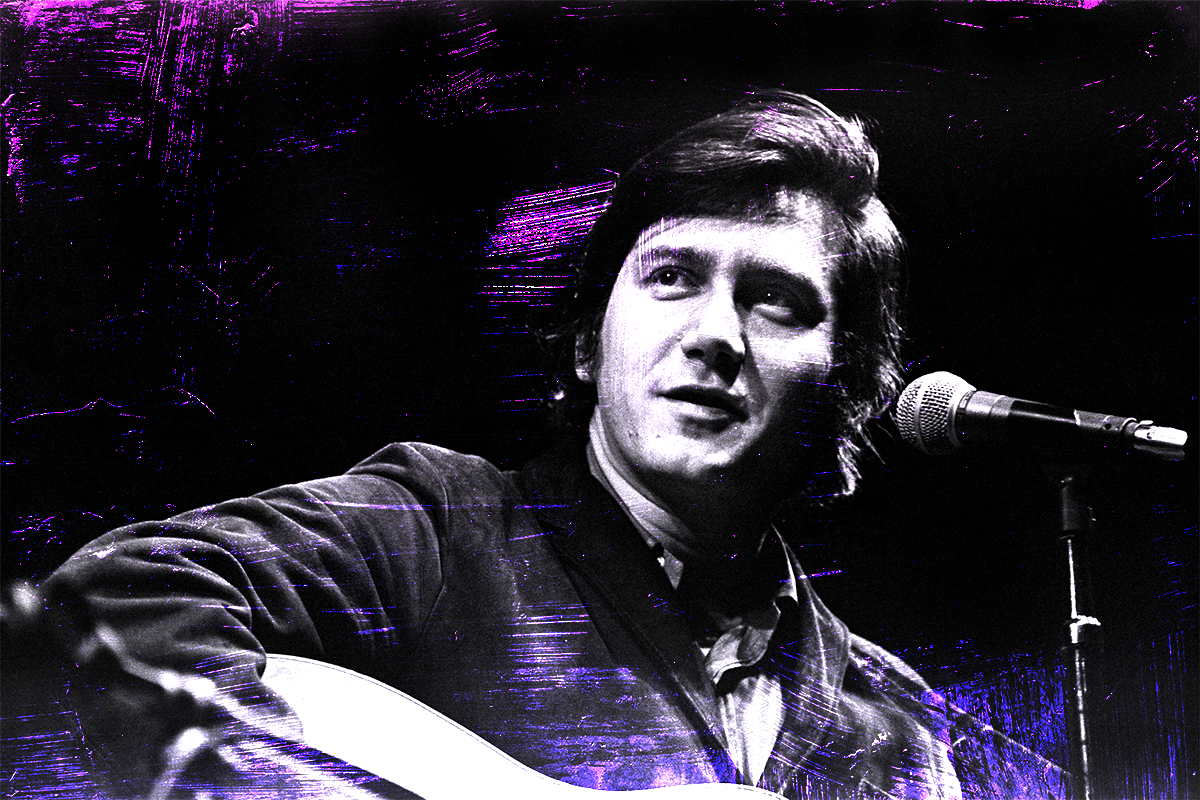
“I’ve memorized Lerner and Golden / I feel like I’m almost a Jew!” sang the late protest singer Phil Ochs. This might fall suspect on your ears, as he calls out noted Jewish journalists of his era from a goyish philosemitic point of view.
What is not often discussed? Ochs himself was Jewish, and this line was a bit of political satire. Perhaps you’ve never heard of him until now, but allow me to introduce you to this Jewish protest singer that more people should know about, especially in our current political climate.
His middle-class Jewish family moved around during his youth from Texas to New York and finally Ohio. The young Ochs would turn out to be a clarinet prodigy who joined a university orchestra at age 15. Certainly talented enough to make your bubbe’s upwardly-mobile shtetl neshume kvell. But then his life would unwind, some say into madness, others would say into genius.
His life ended tragically in the ‘70s as many around him noted his mental decline and problems with alcoholism led to his suicide in 1976. April 9, 2026 marked the 50th anniversary of his suicide.
A Humble Request for the New Year: You can help keep Hey Alma's radically inclusive Jewish community free and open to all. Your gift means someone, somewhere, feels a little less alone this holiday season.
Ochs is often overshadowed by his fellow covertly-Jewish, ’60s Greenwich Village colleague Bob Dylan. While Dylan is lauded with a Nobel Prize and endorsements of his influence by everyone from Steve Jobs to Jimmy Carter, I find Ochs’ messages resonate more deeply today.
There is something incredibly literal, descriptive and evocative in Ochs’ lyricism. The messaging of his most well-known tunes are both catchy earworms and biting political accounts of the day.
“Too many martyrs and too many dead / Too many lives were lost and empty words were said / Too many times for too many angry men / Oh, please let it never be again,” sings Ochs in his tune “Too Many Martyrs.” The chorus’ message is impossible to misunderstand: The murder and violence of humanity needs to end.
It goes deeper than just this, however. The song’s verses describe, in an almost journalistic fashion, the murder of Civil Rights leader Medgar Evers by a white supremacist in Mississippi. Ochs was a journalist and even directly stated many of his songs were inspired by news articles.
Ochs invokes Medgar Evers again in the song “Love Me, I’m a Liberal.” The song satirized ‘virtue-signalling’ before that phrase even entered our zeitgeist, and begins with the line “I cried when they shot Medgar Evars.”
Though that first line is promising, the listener soon learns the truth about this narrator. Two lines later he claims: “But Malcolm X got what was coming.” Later on the narrator says: “I love Puerto Ricans and Negros / As long as they don’t move next door.” The narrator also sings “But if you ask me to bus my children / I hope the cops take down your name.” The latter lyric refers to people who refused to have their children take buses to new schools in order to desegregate said schools during the Civil Rights Era. The narrator would rather inform on desegregators to the cops than be inconvenienced by helping desegregate the world their children were growing up in. It’s clear that Ochs understood what virtue–signalling looks like and the damage it causes in our world, and wants his listeners to contemplate this, too.
Ochs has a wide range in the way he is able to get his message across. “Too Many Martyrs” is an incredibly sincere ballad written about Evers’ murder. “Love Me, I’m a Liberal” presents the cautionary tale of what it looks like to say one wants justice, but not follow through with that sentiment with one’s actions. The sincere and the satirical are two sides of the same coin: Ochs wants his listeners to tune in to the political moments of their time and take action — not just give lip service — to end violence.
Near the twilight of his life, Ochs was active in the Vietnam anti-war movement. He travelled to South America and was jailed by the Argentine government after making friends in then Marxist-led Chile with the leftist Chilean folk singer Víctor Jara. He was paranoid that the FBI and CIA were after him; we know today that the CIA was complicit in a coup d’etat ousting the president of Chile, so his paranoia, while maybe overblown by his mental struggles, was not unfounded.
I was an active part of resistance efforts through Operation Metro Surge in Minneapolis. Alex Pretti was murdered blocks from my home after which I and hundreds of others were tear gassed and flashbanged by ICE. I witnessed multiple abductions with my own eyes amidst weeks of responding in the freezing cold. It is no longer a secret that the FBI had been and continues brazenly investigating and arresting protestors, journalists and public officials in my community. Heroes Alex Pretti and Renée Good were called domestic terrorists by top federal officials. Like Ochs in the anti-war movement, many of my friends and I were paranoid during Metro Surge. We were paranoid about who we could trust, about having fates similar to Alex, Renée, the Cities Church protestors or even the Prairieland 19 who were arrested by the government and convicted on terrorism charges. We were paranoid and there were concrete, uncontested reasons why.
I believe we all need to aspire to be tzadikkim (people of righteousness), and this is a continual practice, not a banner one takes up during election years or when activism feels “trendy.” Just like we get preventative care at the hospital, we must practice preventative justice in times and situations which feel calm (though that time is certainly not now).
And so Phil Ochs has been on my mind. He is one of the only musicians of recent memory who has been able to highlight this difficult moral imperative with such clarity. He was a necessary voice in his time, and his message remains urgent today.