Through a feat of figurative time travel, I was able to attend the premiere of “Al Khet (I Have Sinned)”: the first Yiddish sound film to come out of Poland. In reality, it was the U.S. premiere of the film’s restoration at the 35th New York Jewish Film Festival. But even though the screening took place in Manhattan on January 18, 2026 — 90 years after the actual premiere — I felt connected to that first audience. At the time of the initial release of “Al Khet” in 1936, the motion picture, particularly the talking picture, was a new medium. I imagine moviegoers were kvelling to witness people who looked and talked like them represented on the big screen. Being a part of the crowd, that extended mishpacha of past and present, reinforced for me the importance of restoring and witnessing these rare cinematic time capsules of pre-WWII Jewish life.
Directed by Aleksander Marten, the film takes its title from the Yom Kippur prayer, a public recitation of sins repeated throughout the Day of Atonement. The story opens in 1916, at the height of World War I, and follows a Polish family’s tragic separation. Esther, a rabbi’s daughter, becomes pregnant from her relationship with a German Jewish officer who is then killed on the front. As the Russian army invades their shtetl, she is forced to abandon her baby and flee. Fast-forwarding 20 years later to what was then the present day, the film explores the aftermath of Esther’s actions and her search for reconciliation.
In her introduction, Lisa Rivo, co-director of the National Center for Jewish Film — the world’s largest collection of Yiddish language and Jewish-related films — explained that the restoration of “Al Khet” had been underway more or less since the Center’s founding in 1976. Celluloid, like the lives it captured, is a delicate thing. Working alongside her mother, Sharon Pucker Rivo, the Center’s co-founder and executive director, she said the process entailed a series of setbacks and breakthroughs, including a trip to Poland to procure an original print. The digital restoration, featuring new English subtitles, represents a landmark achievement. How fitting that this film about a family’s separation and reunion was restored, in large part, through one family’s efforts.
Much of the film was shot on location, contributing to an atmosphere of realism. The film serves not only as entertainment but as a social and historical document. I was moved every time I saw a character pass through a doorway and lightly touch a mezuzah before kissing their fingers. The automatic gesture will mean something to Jewish viewers. So too will the footage of a congregation on Yom Kippur reciting the Ashamnu prayer, an alphabetical list of collective wrongdoings, fists tapping their hearts. The sum effect is a poignant portrayal of everyday life in a shtetl outside of Warsaw. I pictured my own paternal grandparents and their families.
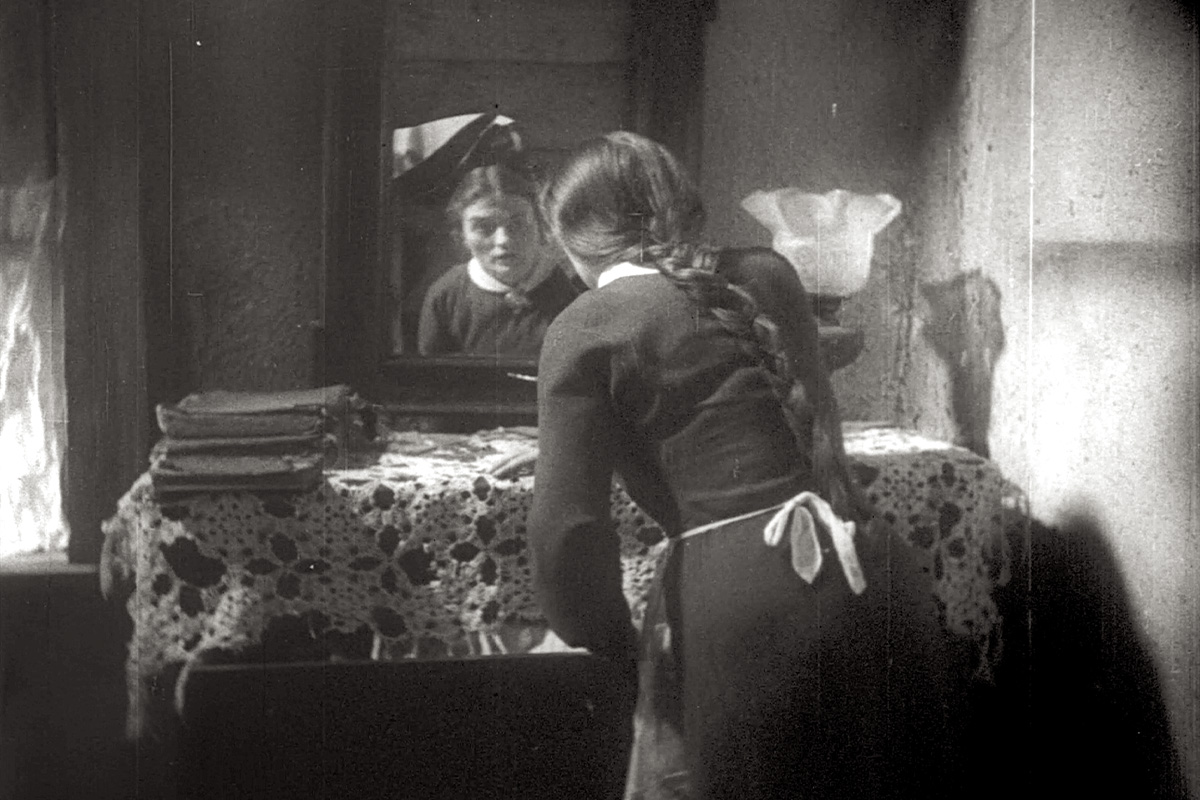
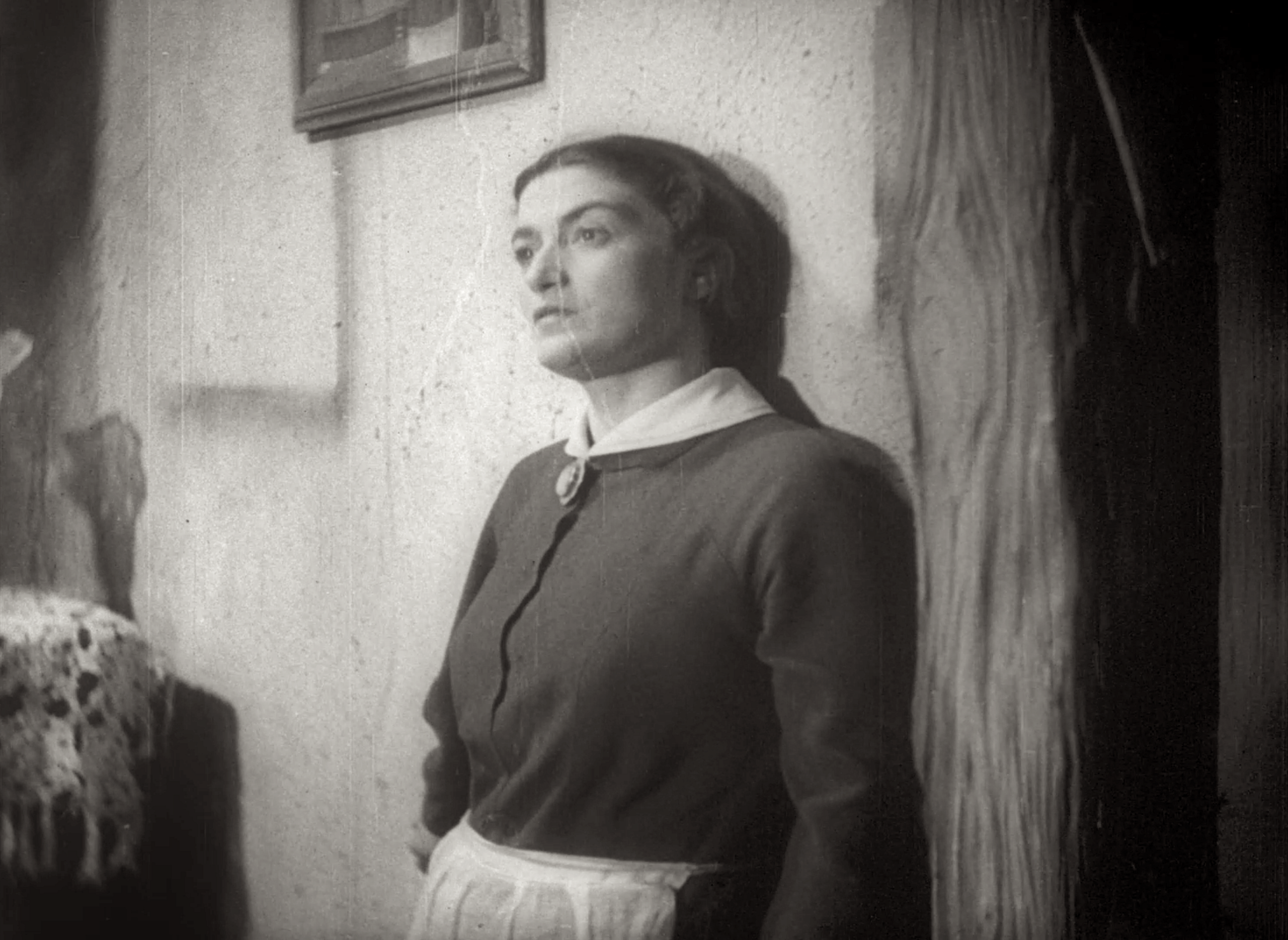
I was also struck by the emotional authenticity. The scenario easily could have coalesced in a one-note melodrama. But the actors endow their characters with complexity and humanity. The film’s cinematography is black-and-white, yet its moral landscape contains many shades of gray. Rachel Holzer as Esther anchors the film. There’s a moment after her father discovers her secret and smashes a mirror in righteous anger, when Esther looks at herself in the shards of glass with guilt and self-loathing. The shattered looking glass reflects her shattered existence, a kind of private prefiguring of Kristallnacht. Instead of wallowing in despair, she sets into action with steely determination.
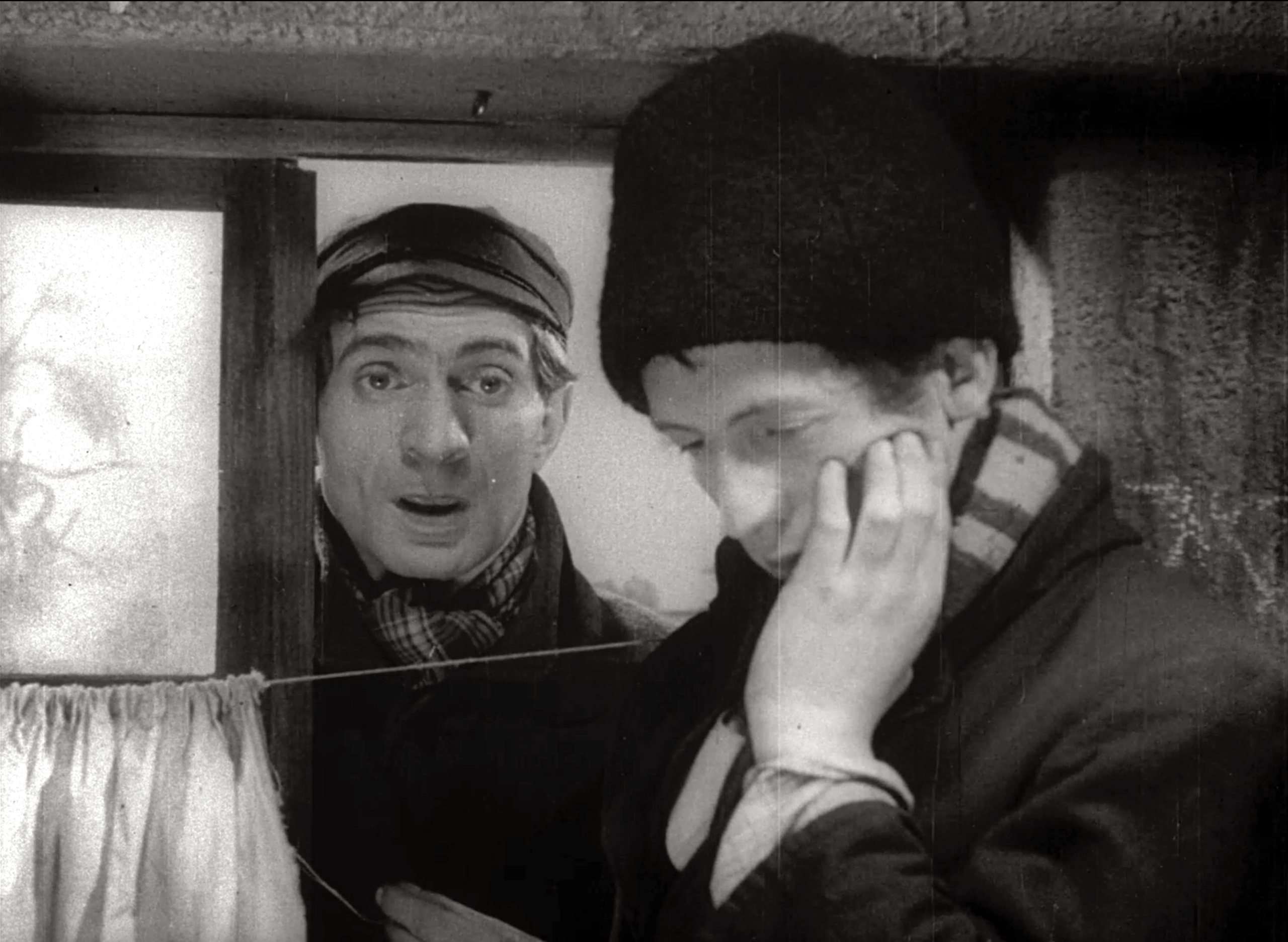
As in life, tragedy and humor are intertwined. Polish comedy duo Shimon Dzigan and Israel Schumacher inject levity throughout. You can see traces of vaudeville and silent film in their expertly calibrated facial expressions. One of my favorite bits of physical comedy happens early in the film: Esther’s rabbi father is absorbed in prayer when her close friends, Szamaj and Awrejmel (Dzigan and Schumacher), appear at the door. Without crossing the threshold or uttering a single word, they signal to Esther that her beau wants to see her. She then proceeds to very quietly rise from the table and exit the house before her father notices. Szamaj and Awrejmel are more than comical sidekicks, though; they play a pivotal role in delivering the story’s resolution.
In the final act, when Esther confesses to a virtual stranger what she perceives as the unpardonable sin of abandoning her baby, he replies without judgment. The sin, he says, was in her circumstances. Absolution does not come via paternal pity or divine decree. “Al Khet” tells a story of self-forgiveness. The psychological depth it affords its heroine feels modern, even while the film is steeped with the inevitable nostalgia of a 90-year-old artwork and artifact.
A chain of coincidences and nearly missed connections leads to a bittersweet ending: the cinematic equivalent of a Hillel sandwich of charoset and maror. The film culminates in song and laughter with the reprise of “Yiddish Tango” (“Shpil zhe mir a lidele in yiddish”): Play a tango for me, please, in Yiddish / It could be a classic or Chasidish… The lyrics go on to reference exile and banishment and resilience in the face of our enemies. (New lyrics were written during WWII, explicitly naming Hitler and the Nazis.) The singer beckons the musician, play, klezmer, play. Play the way a Jewish heart must feel. There is much joy in “Al Khet,” and in the act of watching it. But there is also the heartbreaking hindsight of knowing what would soon follow in Poland, in Eastern Europe, and in the world at large. Joy and heartbreak: is that not the Jewish experience in its essence?
To witness a film like “Al Khet” is akin to observing a religious rite or holiday. This sentiment was heightened by an anecdote Rivo mentioned in her opening remarks. As she explained, there was concern about security at that first screening in Poland in 1936 due to antisemitism. On the day of the premiere, director Marten sent a friend ahead to the theater to scope things out. He received word that there were multiple police cars stationed nearby. But, undeterred, a crowd was clamoring for tickets.
Nearly a century later, guards were posted outside Lincoln Center’s Walter Reade Theater for the New York Jewish Film Fest. Still, we came together. The theater was packed on a cold Sunday afternoon with audience members that spanned generations — Jewish film enthusiasts and professionals alike. As we lose the last of the survivors, organizations such as the New York Jewish Film Fest and the National Center for Jewish Film are performing a true mitzvah in ensuring that these rare glimpses of life before the Holocaust are not only preserved but observed, in every sense of the word.