When Audrey Gelman’s grandmother Sydonie passed away this past April, the 39-year-old Six Bells owner found something among her belongings she didn’t expect: A traditional Austrian costume dress.
That Sydonie spent time in Austria wasn’t a surprise to her granddaughter. Audrey is intimately aware of her paternal grandmother’s story of Holocaust survival: Sydonie and her family escaping Nazi-controlled Poland only for the Soviets to send them to a work camp in Siberia. Years of living under terrible factory conditions. Another escape, this time to hide in Tashkent, Uzbekistan. The long return home after the war. Finding Poland devastated and their old home occupied. Then four years in a displaced persons camp in Salzburg, waiting for visas to the United States to arrive.
The surprise was that the dress was in the closet of a Jewish Holocaust survivor at all. “I didn’t feel that those sort of traditional [European] folk aesthetic belonged to a Jewish experience,” Audrey told me over a recent Zoom call.
We were meeting to talk about The Six Bells latest venture, a home goods collection, created in collaboration with German non-profit The Wallach Project. (More on them in a minute.) And though the line was well under way by the time Audrey found her grandmother’s dress, her response to it is somehow the crux of the entire endeavor: a story of family, diaspora and the forgotten Jewish contribution to European folk art.
Cozy Season with Hey Alma. As the days get shorter, Hey Alma is where you can curl up with Jewish culture that's funny, honest, and open to everyone.
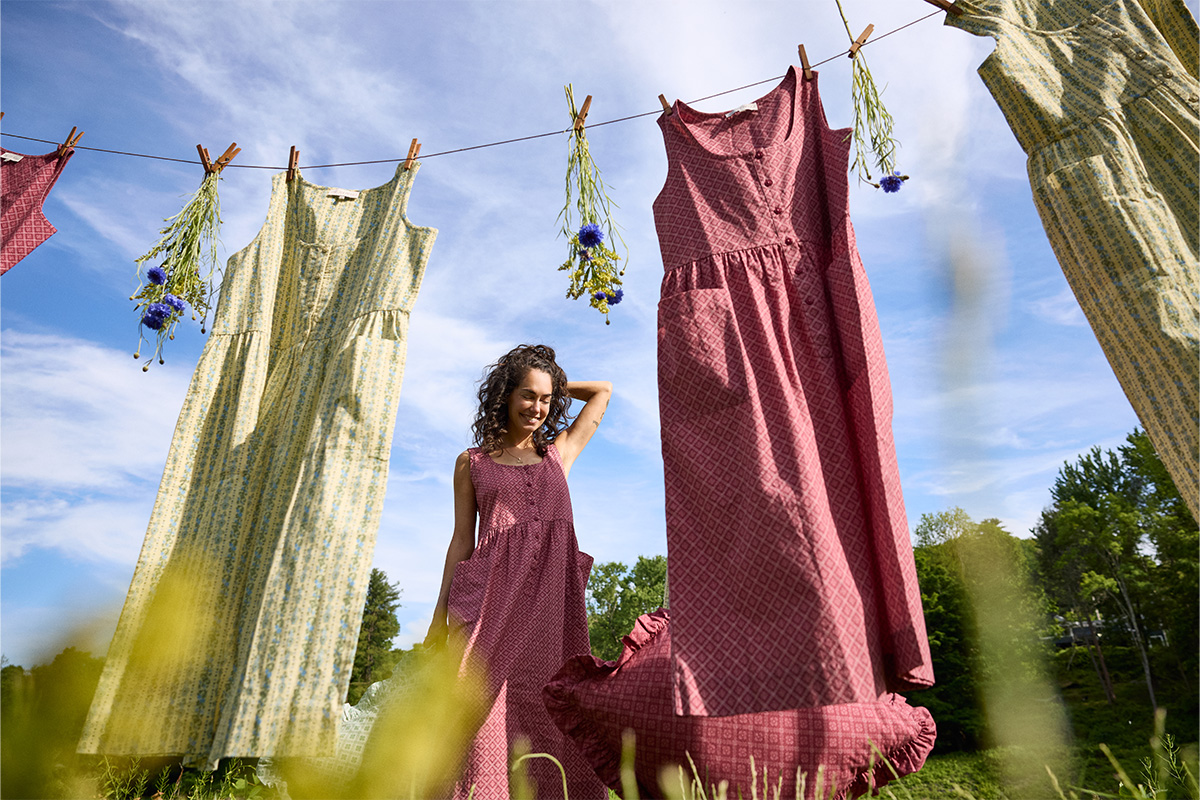
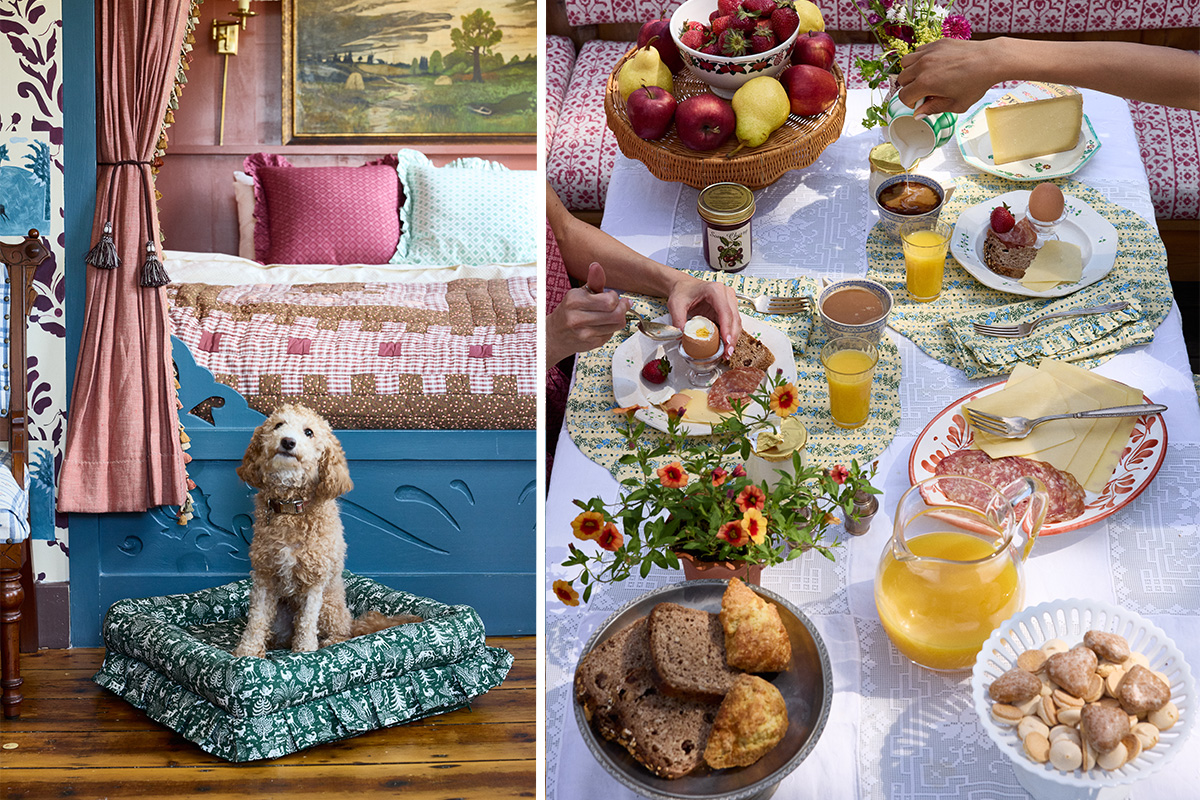
On the surface, the line is a gorgeous array of practical objects. Forest green fabric featuring a Bavarian woodland menagerie adorns oven mitts, pot holders, fanny packs and even a dog bed. Ruffly pillows, scalloped place settings, stylish napkins and cafe curtains come in rustic green, yellow and burgundy floral patterns. The pièce de résistance is a pinafore work dress, a contemporary ode to the German dirndl.
But look a little closer, and there’s a rich Jewish history handprinted in the fabric. That’s because all three textiles used in the line are the product of the legendary Wallach House of Folk Art Munich.
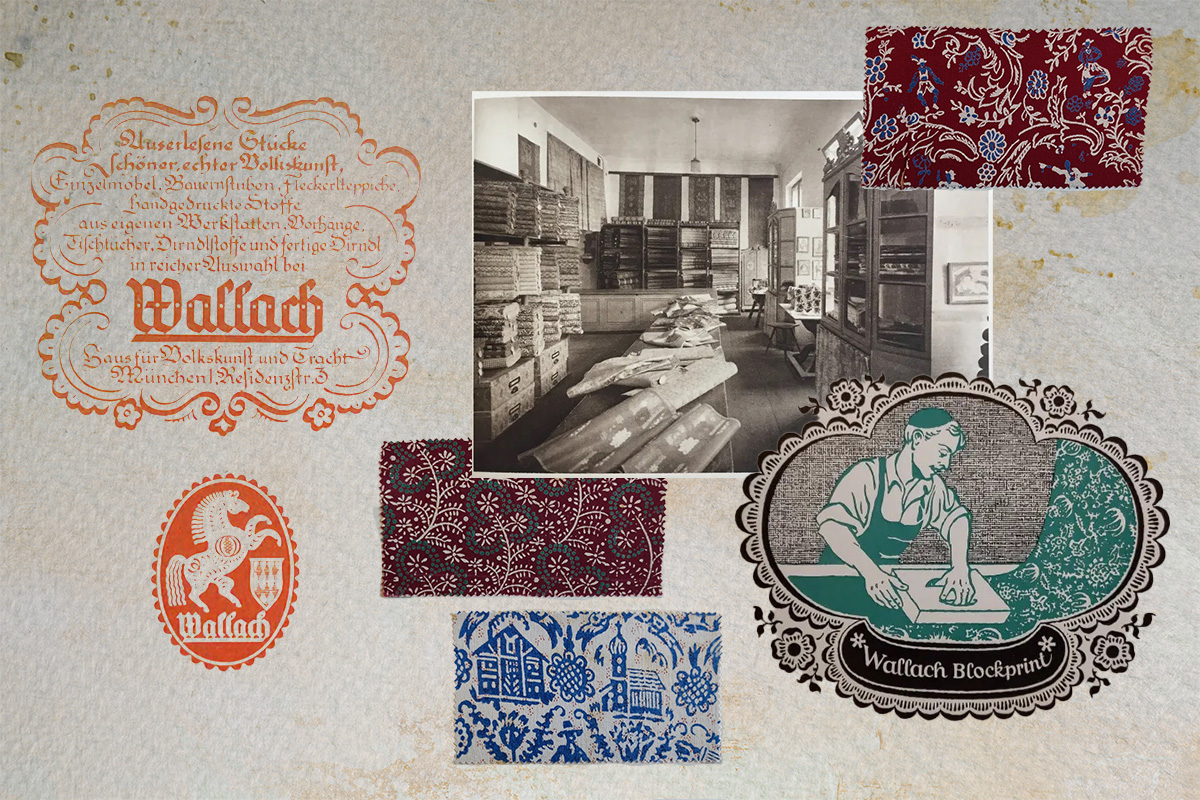
Founded in 1900 by Jewish brothers Julius and Moritz Wallach, and later joined by third brother Max, Wallach House was an influential early 20th century emporium of traditional German textiles and design. The business specialized in hand-blocked and screen-printed decorative patterns. They also made traditional German dress and were largely responsible for transforming the dirndl from workwear to wardrobe staple. (This occurred after Princess Marie Auguste of Anhalt, wife of Prince Joachim of Prussia, wore a Wallach silk dirndl to a Parisian ball.) In its heyday, Wallach was prestigious enough to fill orders from international fashion houses like Paul Poiret, Rodier and Madame Lanvin and inventive enough to collaborate with the likes of Bauhaus artists.
And then the Nazis came to power. The Wallach business was annexed by the Nazi government in 1937 and seized in 1938. Moritz fled to New York and Julius was able to escape to Canada, later ending up in Pennsylvania. Max Wallach and his wife Melly weren’t as fortunate. The couple was deported to Theresienstadt in 1942. Two years later they were murdered in Auschwitz.
The business was never the same as it was, even after being returned to Moritz in 1949. Still, the Wallach patterns endured and today, The Wallach Project carries on the iconic textile house’s legacy. Founded in 2021 by Moritz’s great-granddaughter Amelia Rosenberg and Max’s great grandson Jamie Hall, the board now includes descendants of all three Wallach brothers. Spanning Greece, the United States, Italy, Brazil and England, their aim is to preserve their family’s history. In doing so, they also hope to reimagine what Wallach designs can look like now.
That’s where Audrey came in. She first learned of the Wallach House of Folk Art a few years ago while designing her storybook Six Bells Countryside Inn. Amidst a search for the perfect pastoral textiles, Audrey’s designer Adam Greco sent her a link to The Wallach Project’s website. “I am a grandchild of Holocaust survivors. That is a really big part of my Jewish identity, and my identity in general,” Audrey explained. “So I was captivated by the story of House of Wallach.”
She cold-emailed The Wallach Project to introduce herself, her own family’s story and the idea of licensing three of their patterns. There the collaboration began. Together The Six Bells and The Wallach Project conceived of a line of utilitarian, every day objects — much like the products Wallach House originally made — using quintessential Bavarian and Tyrolian designs. “There’s so much pain around these [family] memories,” Audrey said. “To create something that was joyful and artistic and accessible with [The Wallach Project] felt really rewarding.” That she has just recently lost her grandmother, Audrey acknowledged, has only driven these feelings home further.
Towards the end of our call, Audrey was saying that she never had the opportunity to bring together her creative enterprises and her family history like this before, when her office door opened. It was her 6-year-old son, Sidney. The ’90s cassette tape player he uses stopped working, skipping in the middle of “Charlotte’s Web.”
As her son popped out of the room to retrieve the defective toy for his mom, Audrey paused, watching him go. Then she said: “I think that being able to retell these stories, and not just tell them through photographs and books, but also through objects is really meaningful… for an older Millennial generation who feels so connected to the living grandparents who they got to know and even for my kids, who don’t know about the history yet, but at some point will learn the stories of their great-grandparents.”
Another brief pause as Sidney returned and carefully placed the cassette player on the desk next to her. “Something amazing about the Wallach House is that it was a big company, and hugely influential in German design. And it’s sad because so many of these companies that were seized by the Nazis have been lost to history,” Audrey concludes, spelling it out, “N-A-Z-I-S,” saving the act of retelling for her child for a later time.
“That was a really important part of why I wanted to do this.”