When Alex Knopoff arrived in Innsbruck, Austria for the 2025 Roller Derby World Cup, she knew there would be a few shocks to the system. There was the nine-and-a-half-hour time difference between Innsbruck and their hometown of Adelaide, Australia. There was the summer sun sparkling against the snowy caps of The Alps (it was winter in the southern hemisphere). But perhaps the biggest challenge for the 28-year-old jammer (the primary scoring position in derby), was that she had never actually met her teammates in-person before, let alone skated with them.
That’s because Knopoff, aka Smasha Lyonne, was skating with Jewish Roller Derby.
Jewish Roller Derby is a team that, according to its mission statement, “provide[s] space within the international derby community for the displaced, the exiled, the stateless, diasporic Jewish people.” Strictly speaking, JRD has no home base. The team’s roughly 80 members span the United States, Canada and thanks to Alex, Australia. They also run the gamut of derby ability, making up developmental and competitive teams. Members also vary in their levels of Jewish observance. They keep in touch via an active Discord group, a place where they can socialize as well as organize skaters to go to roller derby matches and tournaments across North America.
But as co-founder Jodi Kansagor told Hey Alma in 2019, JRD was founded in the hopes of being able to send a team to a future World Cup. For Jewish skaters who aren’t on the level of making a highly competitive team like Team USA and/or aren’t interested in competing for their home nation or the nation their ancestors hailed from, they could still have an opportunity to participate.
Cozy Season with Hey Alma. As the days get shorter, Hey Alma is where you can curl up with Jewish culture that's funny, honest, and open to everyone.
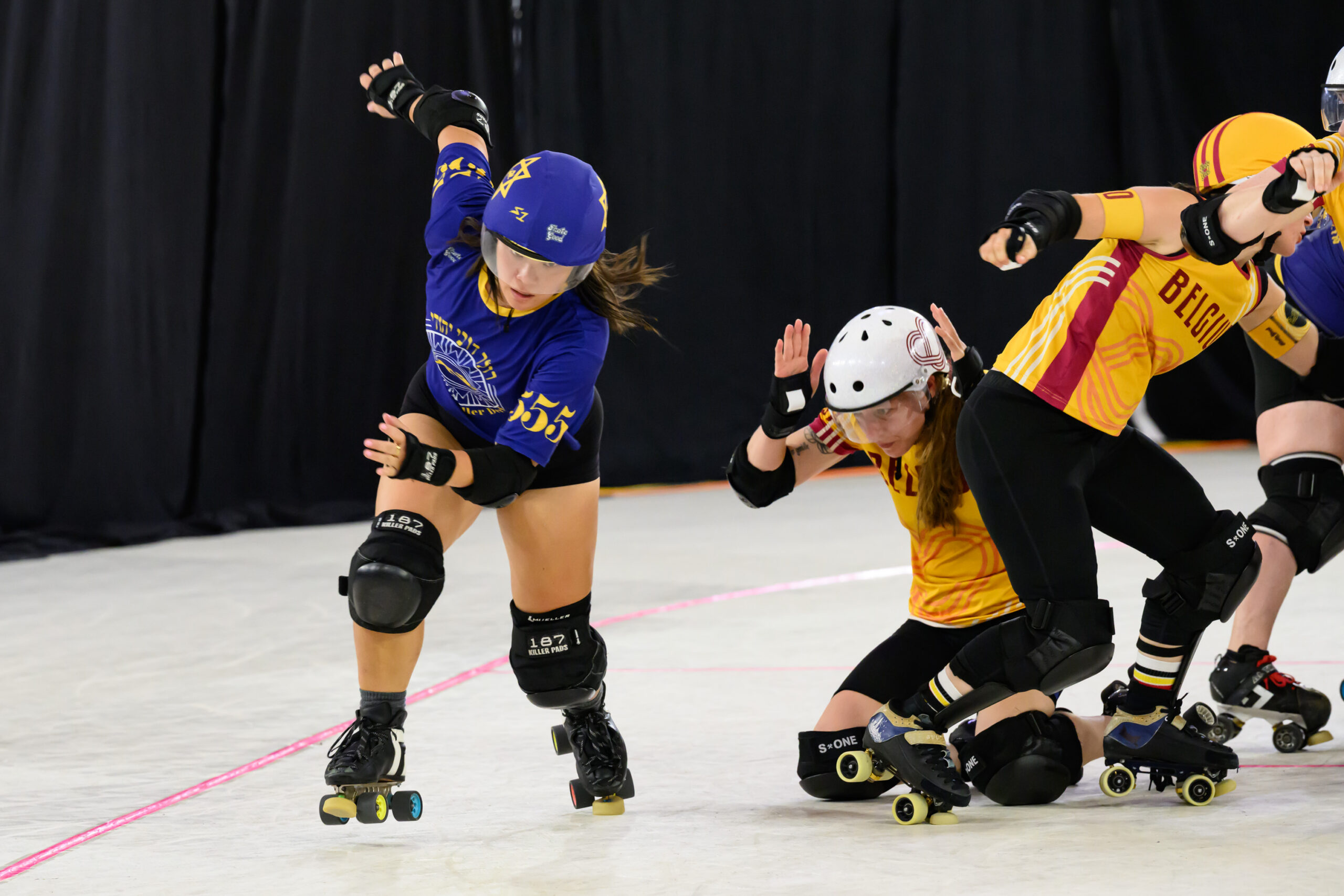
This past July, Jewish Roller Derby finally reached this goal. It sent a team to the highest competition in the roller derby world. There, they competed alongside national teams as well as a thriving contingent of borderless teams including Teams Black Diaspora, Indigenous Rising, Desi, Fuego Latino, SALAAM, Korea, West Indies and Chinese Nations.
“It felt like the most authentic identity for me under which to skate in that space. My European heritage is not something I’m as connected to,” says Gina Rome, aka Winnin’ Rome, a Seattle-based skater who joined the team around 2020. “I think that there are people involved in Jewish roller derby that could probably skate on maybe even a higher ranked national-type team. But I know they choose Jewish roller derby because it’s where they feel the most authentic and where they can really shine.”
And shine they did.
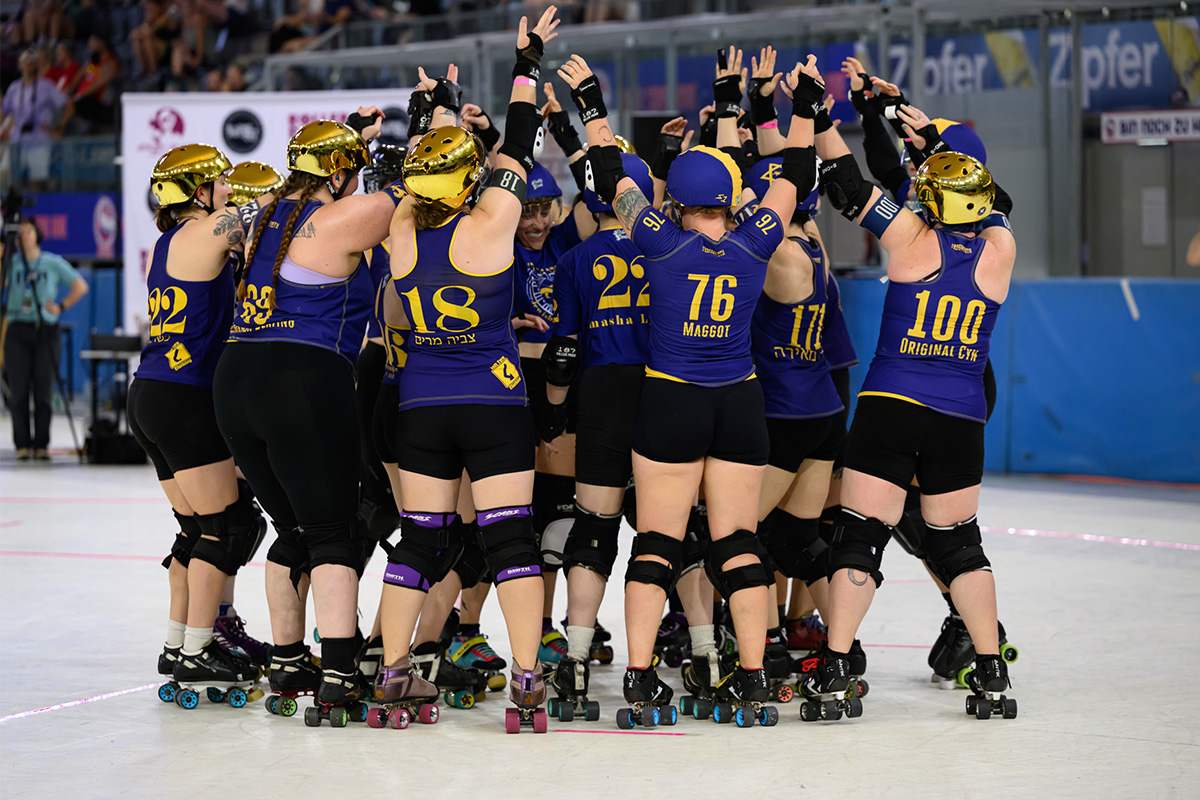
Despite a tough 251-110 loss to Belgium in their first match of the World Cup, JRD bounced back quickly. Skating in the massive OlympiaWorld sports complex, where Innsbruck hosted the 1964 and 1976 Winter Olympics, Jewish Roller Derby took on Denmark. JRD took an early lead, scoring 12 points in roughly the first minute of the game. Denmark, meanwhile, seemed to not have an answer for Winnin’ Rome, who served as team captain that game, and her squad. The Danes’ jammer was sent to the penalty box after the first jam of the game, and they seemingly never recovered. Jewish Roller Derby handily won the match 304-107. The next day, they pulverized Norway — beating the Scandinavian team 289-67. On the sidelines, JRD’s three coaches ran the bench, and substitutes on the bench helped give instructions and cheer. From the stands, JRD’s loved ones and fans got chants of “Hava Nagila” going to spur on the team. “We did the hora non-stop,” Rome recalled.
JRD finished the tournament ranked 16th in the world, the 3rd best showing of a diaspora team at the World Cup. (Behind teams Fuego Latino and Black Diaspora, respectively.) It was an experience that Knopoff described as “exhilarating, exhausting and altogether incredible.” Rome agreed. For her, the outing served as proof positive that borderless teams deserve their place in derby, and in sports in general.
“I think it was an incredible way to see how far we’ve come and how much more we can do,” 35-year-old JRD coach and New Yorker Staci Akselrod, who has been with the team basically since its inception, shared. “We got to do more team activities outside of the tournament than we often have time for, and that was incredibly special. It was a good reminder that we can figure out ways to balance prioritizing competitive rosters with the joy of community and getting to celebrate being Jewish together.”
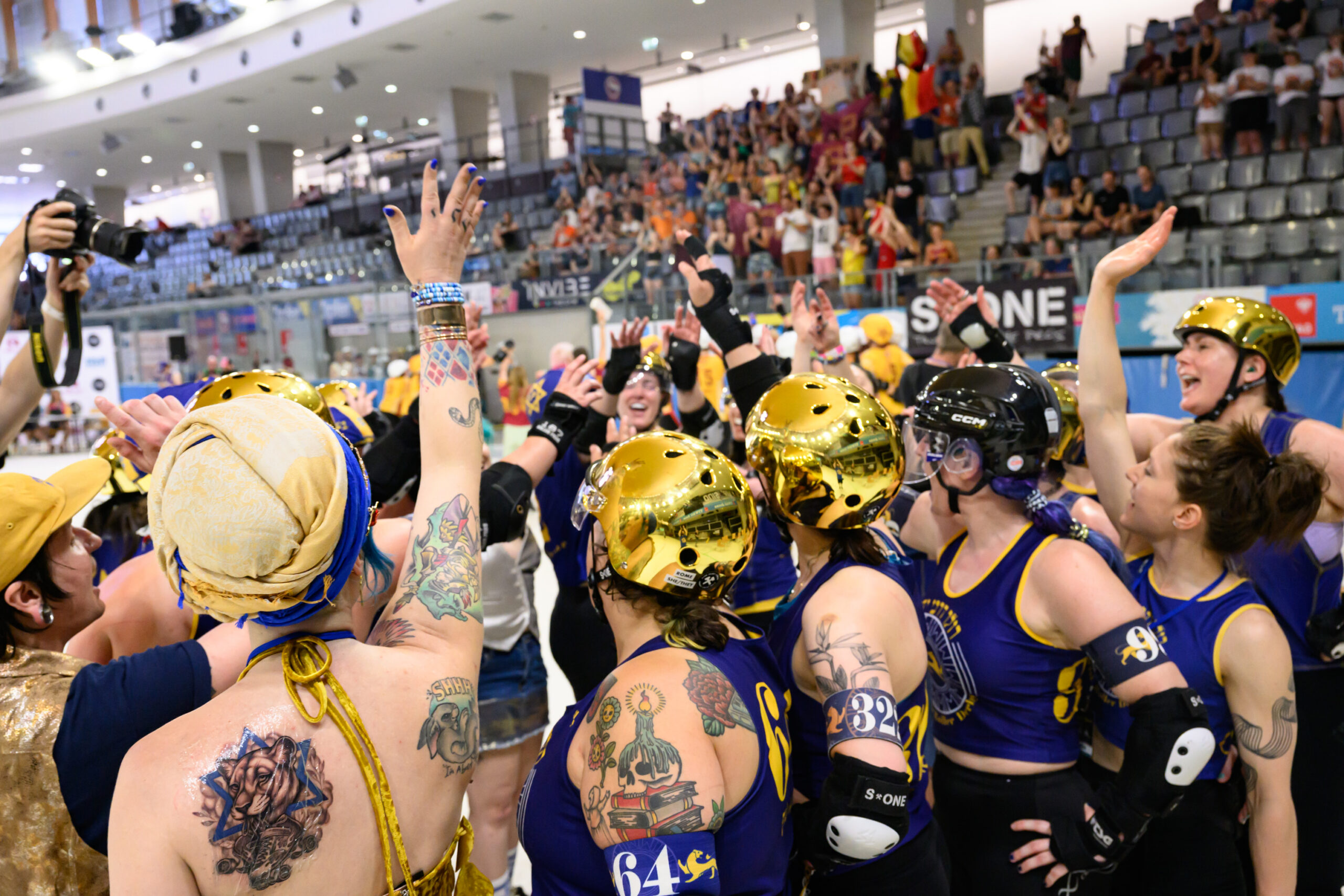
In that spirit, the most memorable moment of the tournament came after the competition ended. At the afterparty, all the teams participated in a Parade of Nations. JRD decided to walk out to “Hava Nagila” and proceeded to hoist a member of their team on a chair and do the hora. “The joy of getting to do a hora in front of a crowd, most of us in skates, was infectious. It was seriously so invigorating and just felt like a beautiful representation of us,” Akselrod told me.
Knopoff added, “It was a moment of pure Jewish joy that I don’t think I’ve felt since going on Netzer camps when I was younger.” (Netzer is, Knopoff explained, Australia’s equivalent of NFTY.)
For all the team’s success, it wasn’t an easy path to get there. Not having a home base means that JRD has fewer opportunities to practice together as a full team. With the opportunities they do have, the focus is on communication and basic skating skills and strategy.
And then there was the existential obstacle.
When Jodi Kansagor initially reached out to World Cup organizers and Nations Committee after the 2018 Roller Derby World Cup about a potential future Jewish Roller Derby team competing, they said no. Despite having made exceptions in the past for Team Indigenous, Team Korea and Team West Indies, a team composed of Jewish skaters from the diaspora didn’t fit their definition of a nation. That is to say, a political state with borders. Undeterred, Kansagor challenged the rejection, doing what a Jewish person does best: interrogating and laying on some guilt. The decision was ultimately reversed and the Roller Derby World Cup began to redefine their idea of a nation based on culture, rather than states.
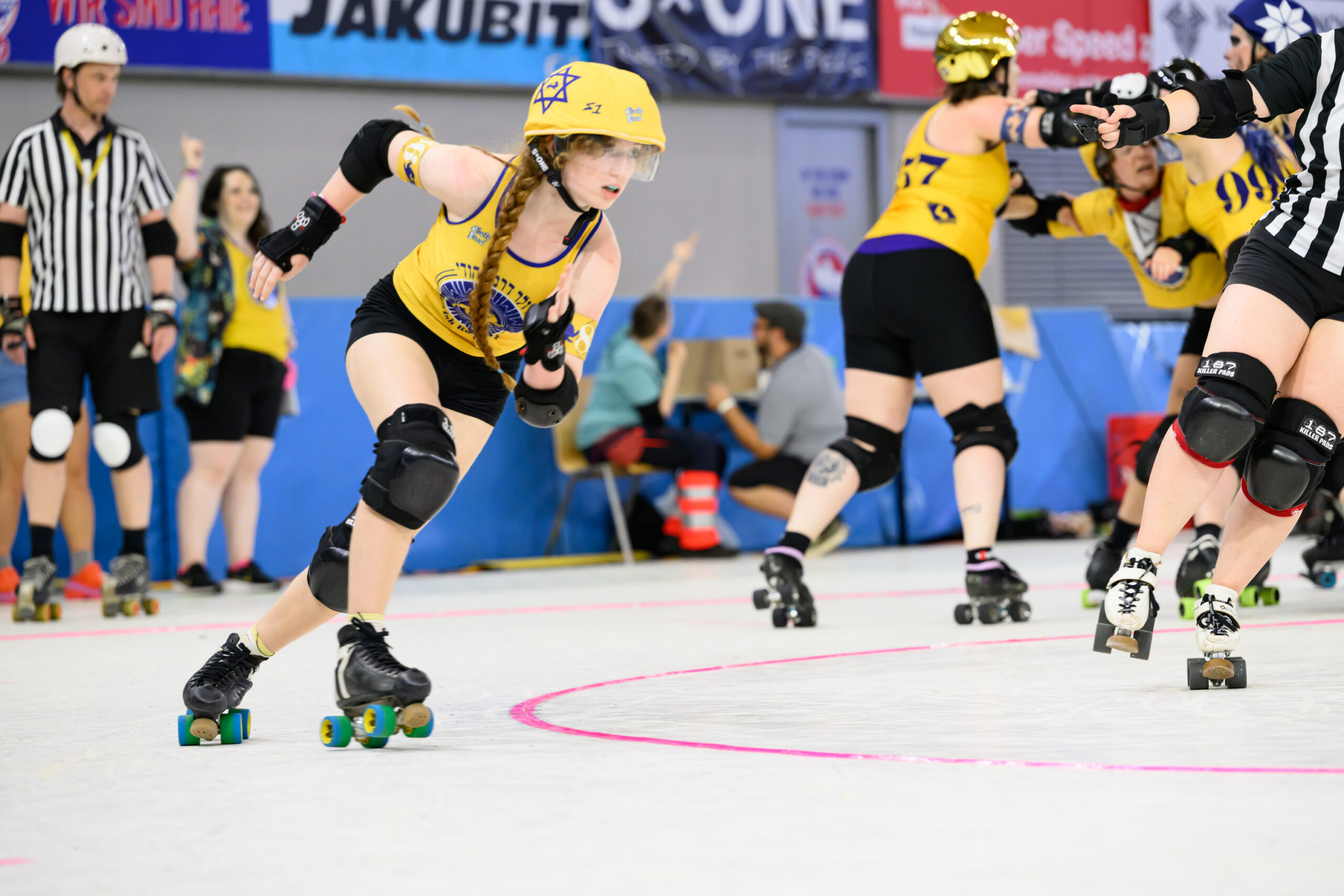
It’s within this paradigm of Jewishness outside of anything else that draws in so many players. For 36-year-old Rachel Sherman of Tempe, Arizona, aka Sure, Mensch, joining JRD in 2019 “felt like an invitation back into Judaism” after growing up in the Jewish community and then falling away from it. “[JRD] has reignited my love of and relationship to Judaism,” they told me. “It’s been a place where people of different backgrounds, political lines and relationships to Judaism can connect, share, question and build community in diaspora.”
Meanwhile, Gina Rome had the opposite experience: roller derby as an invitation to Judaism. Rome met her wife Dana, a rabbi, doing derby, and through her, Rome started to live a Jewish life. And while Dana has since hung up her skates, as soon as Rome completed her conversion in 2020, she resolved to try out for JRD. “Right off the bat, it was like roller derby Judaism,” she told me, laughing.
Though the two players took different paths to play for JRD, for both Rome and Sherman, the effect is the same. Together, and alongside their teammates, JRD has brought them closer to their Jewishness. It’s given them a space to express their Jewish identities via Jewy derby nicknames (or even their Hebrew names) and Shabbat and havdalah rituals when tournaments occur on the weekends. And of course, who can forget the legendary Worlds Parade of Nations hora?
Now that this World Cup cycle is over, its successes and challenges surmounted, what’s next for Jewish Roller Derby?
Well, the group recently concluded a virtual tryout process, something JRD does periodically. “We’re looking for a wide range of skating skills, beyond a baseline,” Akselrod explained when the skater search had just launched. “The important [thing] for us is a desire to be part of the community and to really show us why being on JRD would be important.” Thanks to their virtual tryout, JRD welcomed 11 new skaters to their roster, including the delightfully named Mazel Tov Cocktail from Thunder City Derby Sirens, Yid Vicious from Ann Arbor Roller Derby and Shmaltzy from San Fernando Valley Roller Derby.
Rome, Akselrod and Knopoff all offer practical advice when I ask how fans can keep abreast of JRD or how JRD hopefuls can get involved. Rome recommended tuning into the team’s social media, particularly Instagram, for events or merch sales. Akselrod, meanwhile, encouraged potential future JRDers to not be afraid to reach out; Knopoff added to not let distance be a deterrent.
Sherman’s guidance was more emotional, but equally as important.
“Please know that you don’t have to be ‘Jewish enough’ to join. Part of our story as people in diaspora is that many Jews were forcibly separated from our heritage and practices,” Sherman offered. “Whether you grew up very integrated into Judaism, or your Judaism feels like a distant part of you, if you are seeking Jewish community in derby, JRD wants to build with you.”