The Met Gala is the party of the year — a fundraising event for The Costume Institute at The Metropolitan Museum of Art, the fashion Oscars and the most watched red carpet on the East Side all combined into one. Today it makes headlines with its themes for the annual exhibitions and elaborate red carpet outfits of celebrities. In 2015, the theme “China: Through the Looking Glass” sparked a viral moment when Rihanna’s yellow Guo Pei gown and coat were turned into an omelette meme. In 2022, to honour a theme “In America: An Anthology of Fashion” Kim Kardashian controversially wore Marylin Monroe’s actual gown for the red carpet.
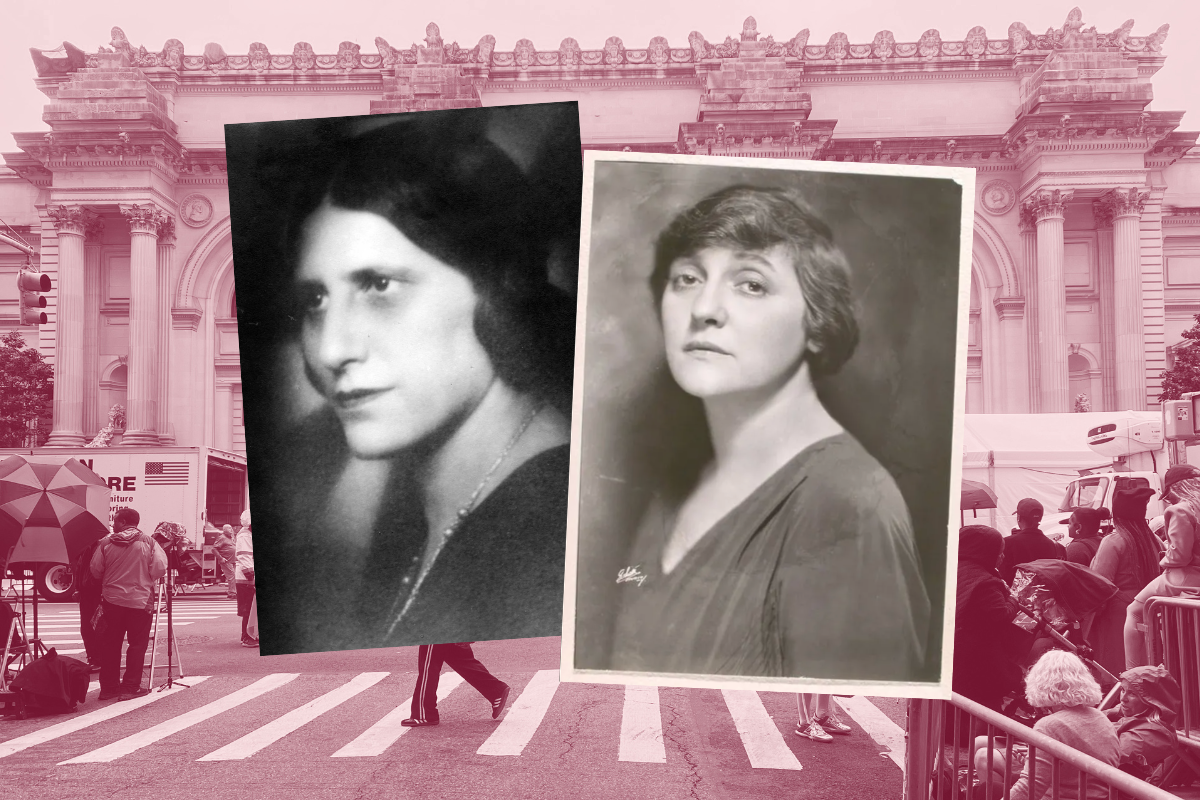
But behind all that spectacle and glamour is a story that begins with two Jewish women. Before becoming a part of the Met and making global news, The Costume Institute began as an independent organization called the Museum of Costume Art. It was founded in 1937 by Irene Lewisohn, a theatre director and co-founder of the Neighborhood Playhouse, and its set designer, Aline Bernstein.
Irene was born into a wealthy German Jewish family. Her father, Leonard Lewisohn, died when she was 10 years old, but he left a multi-million dollar inheritance to his many children, allowing Irene and her sister Alice to dedicate their lives to the arts.
The sisters founded a community theatre, the Neighborhood Playhouse, at the Henry Street Settlement on the Lower East Side, a historically Jewish neighborhood, in 1915. Notably, the Neighborhood Playhouse was run by women, and there was no racial segregation.
Cozy Season with Hey Alma. As the days get shorter, Hey Alma is where you can curl up with Jewish culture that's funny, honest, and open to everyone.
They became known for staging experimental, even avant-garde plays that combined drama with dance, pantomime, poetry and music. They presented smaller works by acclaimed Irish playwrights like George Bernard Shaw and James Joyce, as well as Eastern European Jewish writers such as Sholem Asch. The Neighborhood Playhouse also hosted guest performers from across the country, including the Fraye Yidishe Folksbiene (Free Yiddish People’s Stage).
In its early years, the Neighborhood Playhouse staged plays in Yiddish, making it a cultural hub for Jewish expression. One of their most famous productions was “The Dybbuk” in 1925, a Yiddish folk tale for which the sets, designed by Aline Bernstein, were critically acclaimed.
Meanwhile, Aline Bernstein (née Frankau) joined the theatre first as a volunteer creating costumes, and then moved on to props and sets. The Neighborhood Playhouse was the first theatre in New York to design and make its own scenery, costumes and props.
Although Bernstein is usually associated with her love affair with writer Thomas Wolfe, she was a singular personality. She was the first woman member of the designers’ union, Local 829, the Brotherhood of Painters, Decorators and Paperhangers, of the American Federation of Labor. She received a Tony Award for Best Costumes for a production of the opera “Regina” in 1950. Bernstein wrote novels, taught at Vassar College and mentored future costume designers, including Irene Sharaff — who is responsible for the iconic costumes for “Funny Girl” and “Hello, Dolly!” — and she was the driving force behind the foundation of the Museum of Costume Art.
As they had collected a significant number of historic and regional garments, as well as their own stage costumes at the Neighborhood Playhouse, Irene and Aline felt these pieces were of real historical and educational importance, so they decided to create the Museum of Costume Art. Its first exhibition was held on May 3, 1937, in the Art Deco setting of the recently opened La Maison Française at Rockefeller Center. However, they did not have a permanent home; at one point, the collection was even stored at Saks Fifth Avenue. In 1946, with the financial support of the fashion industry, the Museum of Costume Art merged with The Metropolitan Museum of Art as The Costume Institute.
Just two years later, in 1948, the first Costume Institute Benefit was held. It was organized by Eleanor Lambert, a PR visionary who founded New York Fashion Week, the Council of Fashion Designers of America and the International Best-Dressed List. The benefit was introduced as a midnight supper, dubbed “The Party of the Year,” priced at $50 per ticket, but it was not much different from other fundraising functions in New York City and was essentially an industry event.
Things shifted in 1973, when legendary fashion editor Diana Vreeland was appointed Special Consultant to the Costume Institute and took the helm of organizing thematic exhibitions. Previously, according to her biography “Empress of Fashion” by Amanda McKenzie Stuart, an Institute staffer recalled, “It was basically Seventh Avenue, a lot of Jewish people. A rabbi’s wife who knew everyone did the seating.” Vreeland brought the glamour and glitz of A-list celebrities and high society to the event, breaking attendance records for the Costume Institute at the time.
Since 1995, Vogue editor-in-chief Anna Wintour has served as chair of the Met Gala (except for 1996), bringing the full force of the fashion and entertainment industries and consistently breaking fundraising records. While each year the Met Gala grows bigger and more extravagant, so do the proceeds, which have lately been reported at over $12 million.
What started as a simple fundraising dinner is now known as the Met Gala. Its main mission is to raise funds for the Costume Institute’s operations, supporting research, preservation and maintenance of the largest fashion collections in the world, as well as one of the world’s foremost fashion libraries — the Irene Lewisohn Costume Reference Library. It only makes sense that the Met Gala has turned into a red carpet spectacle, given its origins with theater founders.