After Deborah Kaufman founded the San Francisco Jewish Film Festival in 1980, she told the New York Times that her inspiration came from wanting to “express my Jewishness and my progressive politics and my cultural hipness at the same time. There was no venue like that at the time, so I had to invent one.”
Since then, Kaufman’s mission has been realized — and then some. From its early days, the San Francisco Jewish Film Festival’s audience has included, in Kaufman’s words, “gay men, lesbians, vegetarian holistic Hasidics, Holocaust survivors, atheist Jews, leftists and scholars.” They’ve presented films from Louis Malle’s semi-autobiographical film “Au revoir les enfants” to Peter Vack’s digital dystopian drama “www.RachelOrmont.com” to Amber Fares’ documentary following Israeli comedian Noam Shuster-Eliassi “Coexistence, My Ass!” The film festival also centered stories about the Sephardic and Mizrahi Jewish experience before most mainstream Jewish institutions did, and included Palestinian voices as well.
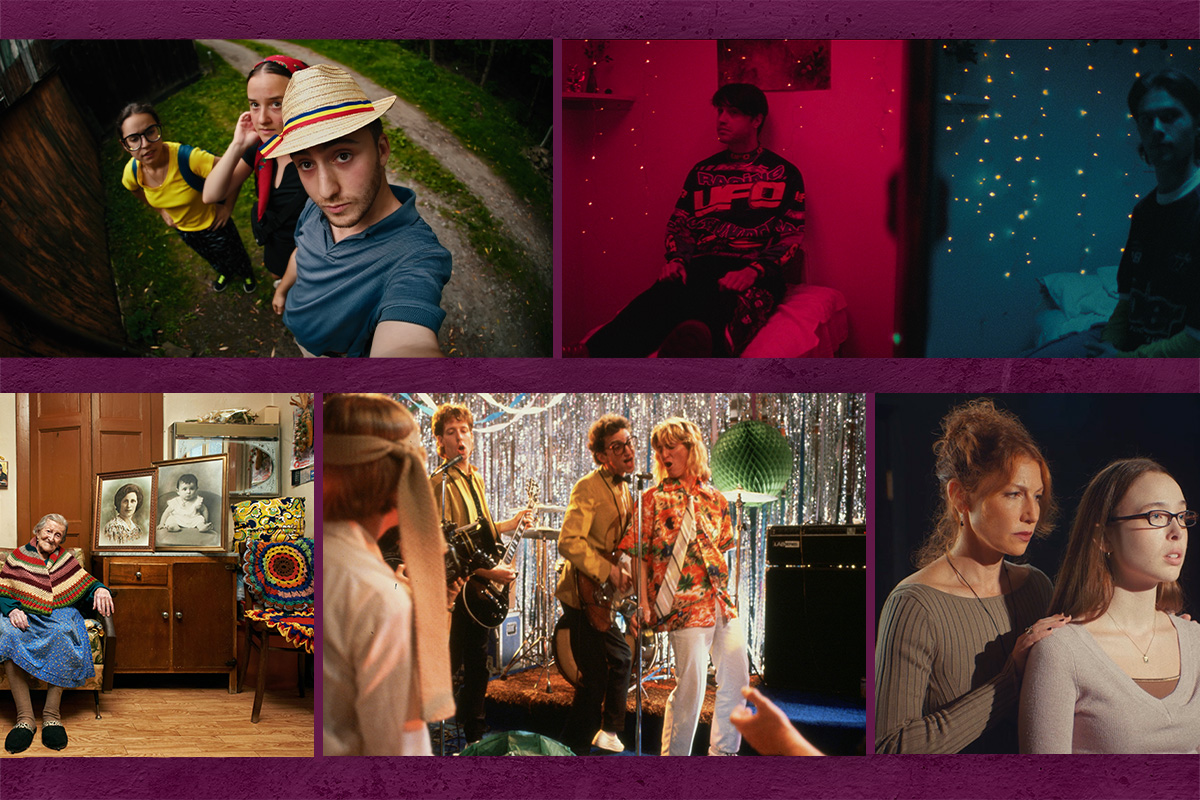
In that way, it just feels correct that since festival director Ash Cook started in 2023, he has spearheaded a charge to bring a fresh, new energy to the festival. In conjunction with director of programming Dominique O’Neil, they’ve made it a priority to highlight young Jewish filmmakers and expand upon the idea of what a Jewish film is. The 46th San Francisco Jewish Film Festival, now running through Aug. 2, is reflective of that effort. Eight of the 32 films are part of its Next Wave line-up, a program geared towards Gen Z audiences. This includes “I Don’t Know What I’m Doing Here,” a documentary by filmmaker Jacob Pincus, co-produced by Hey Alma, which follows a young woman’s online and real-life journey to Romania to connect with the memory of her Holocaust survivor grandmother.
I sat down with Ash and Dominique to discuss this new turn for the San Fransisco Jewish Film Festival and how “I Don’t Know What I’m Doing Here” plays into their mission of welcoming young Jewish filmmakers to the table.
Cozy Season with Hey Alma. As the days get shorter, Hey Alma is where you can curl up with Jewish culture that's funny, honest, and open to everyone.
This interview has been lightly condensed and edited for clarity.
Could you tell me about the young energy you’re bringing to the festival, and what’s driving that reinvention?
Dominique O’Neil: The festival itself was founded 46 years ago as the first Jewish film festival in the world. This is the longest-running Jewish festival, and I think with that comes a lot of responsibility in carrying on the legacy and the gravitas that the festival holds. We have this role in carrying that forward, and also that means that it’s integral to our work to expand and evolve what that Jewish story is. In these last couple of years of working together, we’ve been thinking through what that looks like. And I think we have a lot of belief and trust in young Jewish filmmakers to tell their stories and to explore and define their own generation of storytelling.
Ash Cook: And partially it’s just natural. It’s really cool and unusual that there are young directors working this festival, and it’s really smart and exciting to also work with colleagues of ours who have been doing this much longer. We have really interesting points of view and intergenerational exchange even on our team. I think that bears out in a program that captures both a great fidelity to Jewish tradition and continuity, but also evolution.
I think for us, and for almost every major arts organization right now, the young demographic is of such great interest. What’s been funny for me being part of those conversations at many organizations is to see this desire on the behalf of the organization to reach these people, and a great hunger, I think, in young audiences. But there is so much befuddlement about, like, well, how do we reach them? And it’s like, how are they so starving and also not coming to the meals that we’re serving? And so it’s been really fun to use what tools are available to us, specifically as curators, to address that question and build that bridge.
“I Don’t Know What I’m Doing Here” is one of those films that has potential to build that bridge. What stood out to you about it when you were looking at submissions for the festival?
AC: “I Don’t Know What I’m Doing Here” is a perfect example of a film that captures a tried-and-true theme that works for our core audience — which is a return to the old country to explore family history. But it does it with so much Gen Z pizzazz and visual language that’s for the digital native. That’s the perfect thing for us to exemplify this moment that we’re in.
DO: When I watched the film, I thought what is really interesting about it is that pretty soon we won’t have these firsthand accounts of the Holocaust. And so to see this protagonist kind of already lose that connection to that account and have to find a route through records and historical archives to discover her family story — I think even in the beginning of the film, Mima says she found her grandmother’s Holocaust testimony online, and that’s how she listened to it. What I was responding to was this idea of how young people are going to be exploring their own family Holocaust histories in a time when those histories are preserved but are not directly tied to their current family members. I think this film does a really excellent job at exploring what intergenerational trauma looks like when you’re so far removed, especially for generations of this age.
AC: Plus, it’s fun. We’re a Jewish festival, so we play a lot of films that are about Holocaust history and memory that are often challenging. To be able to approach that topic with levity that maybe also comes from distance… this new style has energy, has verve. Sometimes part of the work that we’re doing and the evolution that we’re doing is getting creative about what qualifies a film for a Jewish festival. What about these films, showing them in a Jewish context or talking to the maker about how their Jewish philosophy might inform their work, is part of the evolution that we’re doing, and is part of maybe the stretching of the vision? But then when a film like this comes along, it’s just a slam dunk.
In covering art for Hey Alma, I’ve found that question of “what is Jewish art” coming up again and again. And it seems increasingly that for the younger generation of artists, their art is Jewish because they are Jewish. Do you feel any sort of pushback from older generations at the festival to this flexibility?
AC: Totally, which is so Jewish to have happen. And it’s so fun. Our audiences will take you to task. They’ll be like, “Why the heck did you program that? Like, what were you thinking?” And sometimes, while it can feel like an affront, what you see is that person who asks you that really sharp question at one screening is at a screening the next day. They’re not reacting and critiquing and then leaving. Part of our festival is that we have this very close and very vocal relationship with our audience, which feels so distinctly Jewish. It’s about questioning. It’s about disagreeing.
To go back for a second, what do you think has been missing for the older generation trying to reach the younger generation, or inviting them to the meal, as you were saying, and connecting those pieces?
AC: My gosh, are we going to figure that out right now?
Yeah, right now.
AC: I think there are a lot of blockages, and they are bidirectional. There’s a very healthy skepticism of institutions and of gatekeeping that comes up in conversation with young folks. Part of our jobs it helping them to understand that perceiving a festival as an institution of gatekeeping is not something that behooves that connectivity, and it’s actually thinking about curators as like gate-openers or opportunity providers, and people who are interested in that connectivity.
I’ll also say that the moment we’re in is so specific politically and in terms of the life cycle of the film festival as a participant in the cinema ecosystem. The good news is that I think post-pandemic, that experience was really instructive. I think for all audiences, what is fundamentally nutritious about cinema is the communal, cultural, social experience. That is helping to bridge this gap a little bit — it’s one of the only silver linings of such a difficult thing for our business and, of course, humanity.
What role do you think the festival plays in shaping contemporary American Jewish culture?
DO: I think we are both very aware of the clout that this organization has, and part of that is due to the filmmakers that we are platforming and highlighting. We do not take our responsibilities in curating this festival lightly, especially in the years following October 7. But we’ve always been so intentional with how we shape this program, and are just so aware of how people look towards this festival and towards these screenings. Even though the institution can be a barrier to entry for some, it still stands that this is bigger than us.
AC: To me, being Jewish and negotiating what that means and how that meets our political moment is maybe more challenging than it’s been in our lifetimes. It’s also more interesting. It makes what we can do at the festival far more consequential. It feels like the stakes are higher when American Jews are really grappling with what our identity means.
In moments of inflection points, we all look to artists to make sense of what’s happening around us. The point of filmmaking is capturing a moment in time and helping an audience to negotiate the meaning making around the times we live in. And so to be able to do that, and to do that in a in a distinctly Jewish context right now, when I think people are desperate for the space to ask those questions and to really get in and around and under them, especially in a space that feels like rigorous, artistically consequential and safe on a community level, are perhaps some of the highest value contributions that an arts organization can make at the moment.